

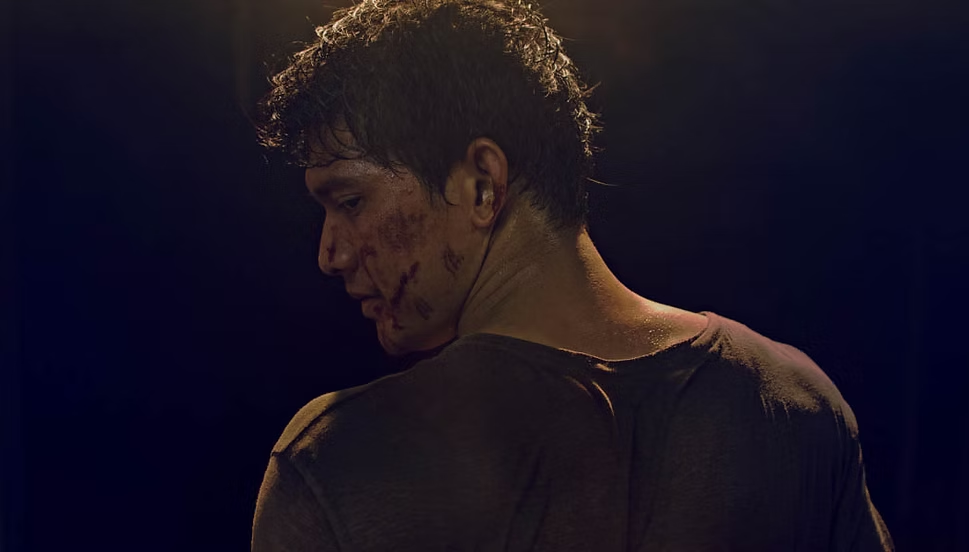
Many artists who create a career-defining masterpiece often find themselves burdened by it. The pressure to replicate or surpass that success can become a creative roadblock. Not every artist escapes the shadow of their own best work.
Iko Uwais appears to be the exception.
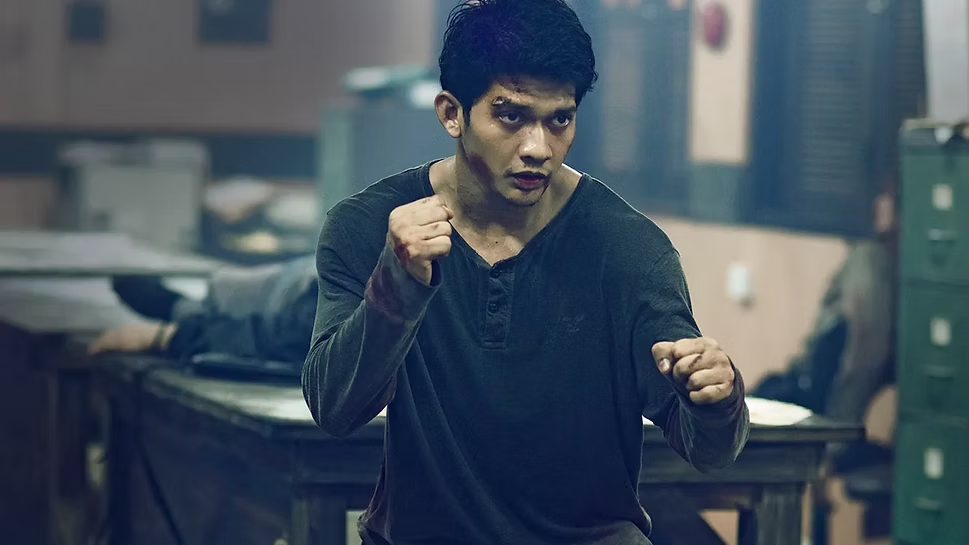
Widely regarded as one of Southeast Asia’s most compelling action stars, Uwais became a household name with The Raid. It was his first leading role—and one that quickly earned cult status worldwide. For many fans and critics alike, The Raid remains his magnum opus.
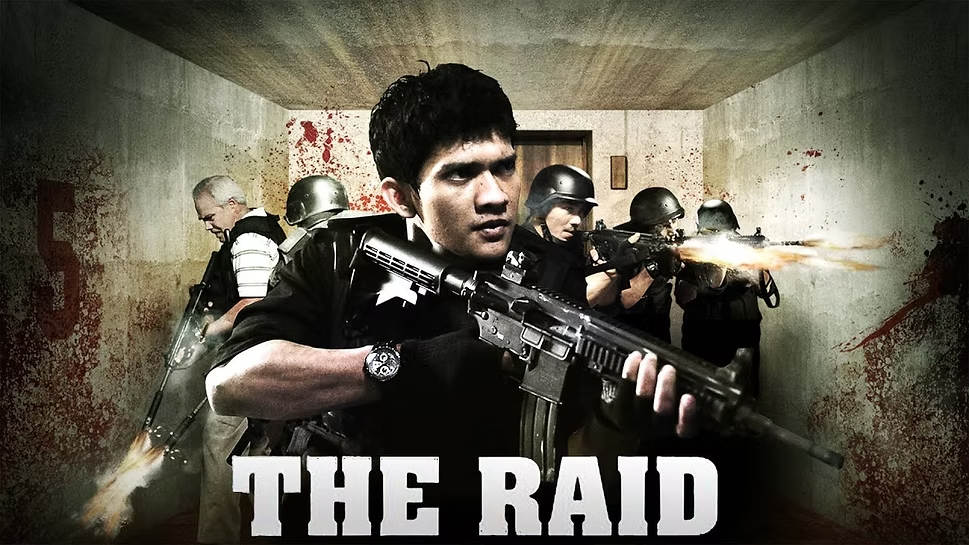
And yet, Uwais doesn’t seem interested in outdoing that film. Instead of chasing the legacy of The Raid, he continues to refine his craft and explore new creative territory. This evolution is clearly visible in his 2016 action-thriller Headshot.
A Different Approach, Not a Duplicate
Headshot does not attempt to recreate the structure, intensity, or style of The Raid. It charts its own course.
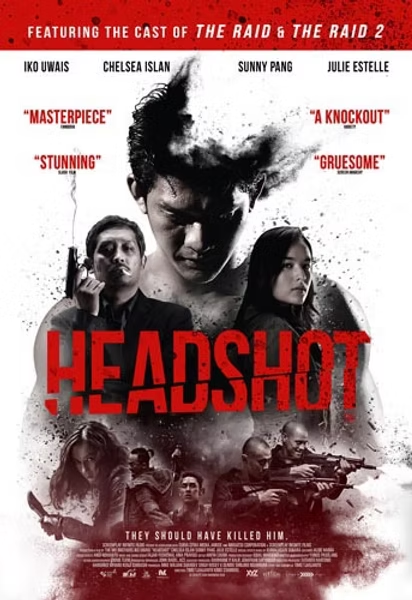
From its choreography to its narrative universe, Headshot embraces a very different identity—so different, in fact, that direct comparison with The Raid feels almost inappropriate.
In Headshot, Uwais plays a man known as Ishmael, later revealed to be Abdi.
Throughout the film, the character is consistently placed in situations that physically restrain or limit him. Whether tied up, locked in small spaces, or forced into restricted environments, these limitations shape the film’s distinctive combat choreography. In one standout moment, with both hands bound, Abdi turns his restraints into weapons—demonstrating both inventiveness and agility. Despite his constraints, Uwais’s signature speed remains a dominant force, proving once again that his physicality is a central strength.
Communicating Through Silence
Before breaking into cinema, Iko Uwais was not a trained actor. However, what he lacks in traditional theatrical background, he makes up for with natural screen presence—particularly through his eyes. Uwais’s gaze carries emotional weight, and Headshot provides a platform for that strength. The film relies on subtle expressions rather than lengthy dialogue, and Uwais excels in this format. His minimal use of words enhances the mystery and emotion of the character while offering a glimpse of his growing range as an actor.
A More Layered Narrative
Unlike many martial arts films that minimize story to prioritize combat, Headshot attempts to offer more substance. The narrative, while not overly complex, offers more depth than typical genre fare. Characters are given backstories, motivations are revealed gradually, and the viewer is encouraged to connect with their emotional arcs.
The pacing allows room for dramatic pauses and character-driven scenes between fight sequences. This approach adds emotional resonance to the violence and creates a more balanced viewing experience. Headshot may not qualify as a drama, but it undeniably offers more narrative content than the average action film.
A Step Closer to the One-Shot Dream
Among action film enthusiasts, the one-shot fight sequence remains a highly respected cinematic technique. The concept involves filming an extended combat scene in a single, continuous take—with no cuts, just camera movement. It allows both the choreography and the actor’s physical skill to shine without interruption.
While Headshot does not fully commit to a complete one-shot sequence, it comes close. Two segments in particular begin as lengthy uninterrupted shots before eventually cutting. These scenes showcase Iko Uwais’s fluidity and control, and more importantly, the film’s editing avoids excessive slicing—preserving the integrity of each action beat.
Standout Supporting Performances
Two of the supporting actors in Headshot deliver noteworthy performances in their roles as combat opponents to Uwais:
Sunny Pang portrays the paternal antagonist with an intense and grounded presence that complements Uwais’s performance.
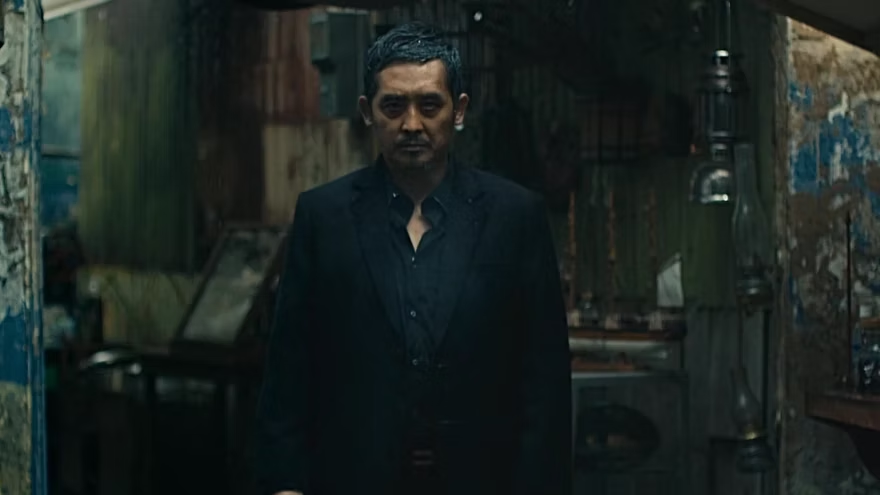
David Hendrawan displays remarkable timing and athleticism, matching Uwais’s speed and contributing to some of the film’s most memorable fight sequences
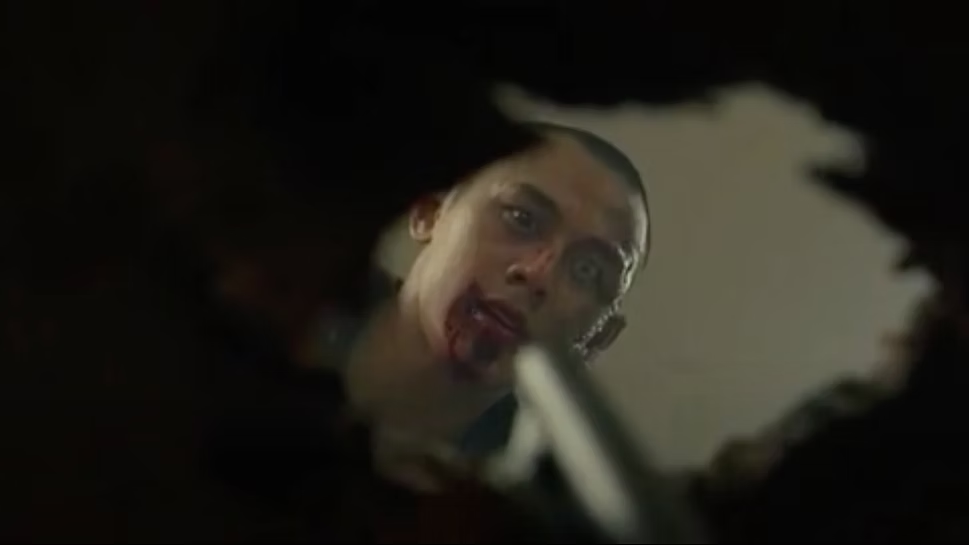
These actors not only hold their own against Uwais but also enhance the believability and impact of each battle scene.
Chelsea Islan: A Promising Presence
Actress Chelsea Islan, who plays the female lead, brings a subtle charm and strength to the role.
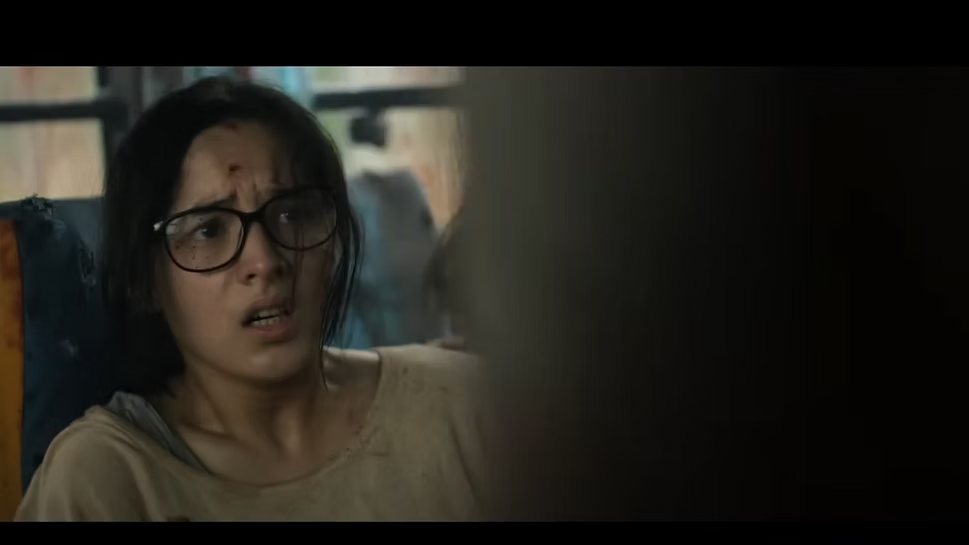
Though her character does not participate in the film’s fight sequences, Islan’s screen presence is striking. Unfortunately, her role is limited in both screen time and emotional range. Given her potential, additional scenes could have allowed for deeper character development or a stronger emotional arc. Still, her performance in Headshot suggests a promising trajectory in future projects.
A Few Flaws in Logic and Originality
Despite its strengths, Headshot is not without imperfections. Several moments in the film raise questions in terms of logic and execution:
The Long Table Scene
In one scene, Ishmael crawls under a long table while an armed opponent stands at the opposite end. Logically, the opponent should have seen him immediately, given the clear line of sight. However, the film chooses to overlook this for the sake of tension and choreography—resulting in a visually engaging but narratively questionable moment.
The Piercing Log Scene
Another scene features a villain pulling Ishmael toward a sharpened log intended to impale him. The attacker uses one hand, and Ishmael remains in place, resisting. Given the character’s demonstrated intelligence and reflexes, simply sidestepping would have been a more believable reaction. As with the previous scene, the filmmakers appear to prioritize visual payoff over realism.
Familiar Story Elements
The premise of Headshot—a trained killer with amnesia trying to escape a violent past—bears a striking resemblance to The Bourne Identity. While Headshot diverges in tone and presentation, the similarity in setup feels a little too familiar, particularly in the film’s early stages.
Conclusion: A Confident Step Forward
Headshot is not a flawless film, but it represents a confident step forward in Iko Uwais’s evolution as both a martial artist and actor. The movie introduces a distinct style, explores new narrative territory, and highlights his growing emotional depth. Instead of trying to outdo The Raid, Uwais delivers something fresh—and that alone is a worthy achievement.
For fans of action cinema, Headshot offers a unique viewing experience. With inventive choreography, powerful visuals, and strong performances, it stands as a solid addition to Uwais’s filmography—and a signal that his best work may still be ahead.
