

Over the past several months, South Korea’s entertainment industry has been hit by a rapid succession of controversies—some substantiated, others recycled, many amplified far beyond their immediate scope.
As actors, idols, and executives face renewed scrutiny, public attention has increasingly shifted from individual wrongdoing to a larger question: why so many high-profile cases are erupting at once, and what else might be happening outside the spotlight.
Cho Jin-woong
The veteran actor faced renewed scrutiny in 2025 after allegations from his youth resurfaced, including claims of a high school–era felony involving robbery and assault, as well as a past drunk-driving incident. Cho denied allegations of sexual assault but, amid mounting backlash and public pressure, announced a complete retirement from the entertainment industry. The abruptness of the decision intensified debate, with supporters questioning the timing and severity of the fallout.
Park Na-rae
Comedian and television host Park Na-rae became embroiled in a widening controversy after former managers accused her of workplace bullying, verbal abuse, abuse of power, and involvement in illegal medical practices such as unlicensed IV treatments from a woman called “INJECTION AUNT” who don’t have proper medical license. Park suspended all broadcasting activities.
Key (SHINee)
Key publicly acknowledged receiving unlicensed medical treatments, including IV drips administered by an individual colloquially referred to as the “Injection Aunt.” He explained that he initially received IV treatments through proper channels at a hospital, where he met a woman he understood to be a licensed nurse. As his schedule became increasingly busy, she later offered to administer the same treatments on-site for convenience. It was only afterward—when the individual became implicated in allegations involving unlicensed medical practices connected to Park Na-rae, and fans surfaced an Instagram photo of her with Key’s dog—that Key became aware of the licensing issue, prompting him to suspend activities and issue a public apology.
Ipjjak-eun Haetnim (popular mukbang YouTuber with over 1.7 million subscribers):
She was also implicated in the “Injection Aunt” (주사이모) controversy for allegedly receiving and distributing illegal appetite suppressants (including controlled substances like “butterfly pills”), resulting in her issuing an apology and announcing an indefinite hiatus.
Jo Se-ho
The comedian faced allegations of close ties to organized crime figures, including photos and claims of associating with gangsters, leading to his immediate suspension from all broadcasting activities and programs like “You Quiz on the Block.”
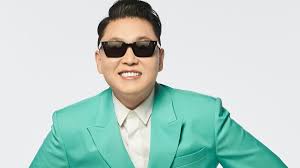
PSY
PSY’s name briefly re-entered online circulation in 2025, largely through recycled controversies and speculative commentary rather than any new allegations or investigations.


(Top right, clockwise) Cho Jin-woong, Bang Si Hyuk, Psy, Jo Se ho, Park Na Rae, Key of Shinee
Bang Si-hyuk (HYBE)
Attention has also turned back to HYBE chairman Bang Si-hyuk following new actions by South Korea’s Financial Supervisory Service (FSS), which reportedly conducted a two-day raid of his residence and launched its own investigation—despite police indicating they were nearing the conclusion of a separate probe.
The police investigation itself has lasted nearly a year, during which Bang was reportedly called in for five rounds of questioning, each exceeding 12 hours, even though the case had previously been reviewed and Bang was cleared at the time.
The overlapping investigations have raised questions about procedural redundancy and timing, particularly as regulatory scrutiny intensifies around major conglomerates. While no new conclusions have been announced, the escalation has fueled public debate over whether renewed enforcement reflects substantive findings—or a broader climate of institutional pressure on high-profile corporate figures.
Public Suspicion: Are Celebrity Scandals Being Used as Distractions?
Many suspect that the ongoing wave of celebrity scandals is a deliberate tactic by the government under President Lee Jae-myung to divert public attention from several controversial issues.
This pattern is described as a recurring “left-wing government” strategy, where scandals are amplified or timed to “dilute” focus on political crises, allowing smoother implementation of regulations or handling of scandals without widespread outrage.
Users often compare it to past instances, like using idol controversies to hide the former first lady’s issues.
Here are some key suspicions tied to President Lee’s actions:
1. Nepotism and Abuse of Power Allegations (Kim Hyeon-ji Scandal)
A major focus is on Senior Secretary Kim Hyeon-ji (often mocked as “Hyeon-ji noona”), accused of improperly influencing personnel appointments and engaging in favoritism.
Leaked texts from lawmakers like Kim Nam-guk and Jang Kyung-tae show requests for her “favors” in high-level positions, leading to complaints filed against her, President Lee, and Prime Minister Kim Min-seok for violating anti-corruption laws.
Kim Nam-guk’s resignation is directly linked, with scandals erupting the same day or shortly after to “cover up” this. Critics call it a “nepotism mess” and argue the government is using celebrity chaos to shield long-time allies like Lee and Kim Hyeon-ji from scrutiny.
2. Suppression of Freedom of Speech (Hate Speech Crackdown and Media Control)
President Lee has publicly vowed “zero tolerance” on hate speech and disinformation, labeling them as “crimes” and directing police to punish without delay, while calling for swift legislation to curb online misinformation.
This is widely viewed by Koreans as a move toward censorship, especially amid debates over abolishing the National Security Law (NSL), which liberals argue undermines freedom of thought and expression regarding inter-Korean issues.
This may be to reduce exposure of government criticism, with scandals “poured out” to shift focus before year-end, allowing these policies to advance quietly. Broader concerns echo the 2024 martial law’s media restrictions, with Lee now pushing a “light revolution” post-debacle.
Some also point to media manipulation in cases like Kim Sae-ron’s family vs. Kim Soo-hyun, where broadcasts were allegedly canceled due to powerful influences, highlighting government-media “kartels.”
3. Data Privacy Regulations and Corporate Accountability (Coupang Hack)
The massive Coupang, Korea’s Amazon, data breach (affecting 33.7 million users—two-thirds of the population) is another flashpoint, with a hacker accessing systems for five months undetected, leading to a police raid on December 9 and potential trillion-won fines. President Lee has demanded tougher penalties and compensation plans, while a U.S. class-action lawsuit looms.
Koreans argue this “national-level crisis” is being overshadowed by scandals, allowing the government to push stricter data privacy regulations without public backlash, as celebrities become the “emotional distraction” while corporations face accountability.
4. Other Connected Issues (Entertainment Industry Ties and Broader Political Fallout)
Suspicions extend to entertainment conglomerates like HYBE and SM allegedly colluding in scandals (e.g., Bang Si-hyuk’s legal issues or “Injection Aunt” cases) to aid diversions.
Users call idols “scapegoats” or “children in Omelas,” urging exposures of “dirty politicians” and a “detox” of the government. Political ties, like those of certain celebrities to the president, are seen as amplifying the fallout.
Historical Precedent
South Korea has a long history of intense celebrity scrutiny during periods of national tension. Idols and entertainers often become symbolic lightning rods—high-visibility figures onto whom broader public frustration can be projected. In moments of crisis, scandals involving public figures tend to spread faster, dominate headlines longer, and absorb disproportionate attention.
Whether coincidence or convergence, the 2025 scandal cycle has reignited debate about media priorities, political accountability, and the ease with which cultural figures can become collateral damage during periods of national uncertainty.
While hard evidence of direct government orchestration is rare (and often dismissed as conspiracy by skeptics), the timing has fueled persistent theories among Koreans, media commentators, and even some politicians. A 2016 NYU Abu Dhabi student research project analyzing news headlines found statistical support for increased celebrity gossip coverage on days with political scandals, suggesting potential media bias or pressure.
Here are some notable historical examples where this suspicion arose:
- 2023 Drug Scandals (e.g., G-Dragon, Lee Sun-kyun): Multiple high-profile celebrity drug allegations dominated headlines amid political controversies under President Yoon Suk-yeol, including first lady Kim Keon-hee’s stock manipulation probes and other issues.
- 2019 Burning Sun Scandal: The massive nightclub scandal involving Seungri (Big Bang), drugs, prostitution, and police corruption exploded alongside political blows to President Moon Jae-in’s administration, including economic struggles and opinion-rigging allegations against allies. Online forums and articles speculated both Burning Sun and related education scandals were amplified to shift focus from government woes.
Fact Checks
Fact-checks (e.g., by Newstop in 2020) examined claims that dating news (like Won Bin-Lee Na-young or Lee Min-ho-Suzy) timed with resource corruption revelations, but found no direct correlation. Critics argue celebrities aren’t influential enough to fully distract the general public (especially older voters focused on politics), and scandals often arise organically due to intense media scrutiny on stars.
However, the theory persists culturally—reflected in films like Unfair Trade (2010), where a prosecutor quips about using celebrity scandals to bury political ones. Korean online communities (e.g., Naver comments, namuwiki) frequently label it “national rule” (국룰) for politics to “dilute” issues with entertainment news.
Overall, while not proven as systematic government policy, it’s a deeply ingrained cultural narrative in South Korea, often amplified on social media and in commentary whenever scandals cluster.
