

Documentaries about musicians are far from new. From The Beatles’ Let It Be to Taylor Swift’s Miss Americana, they’ve long offered fans a deeper look behind the hits. But what’s happening now feels different — and bigger.
WMG’s agreement with Netflix formalizes something the industry has been circling for years: treating artist IP as long-form storytelling inventory.
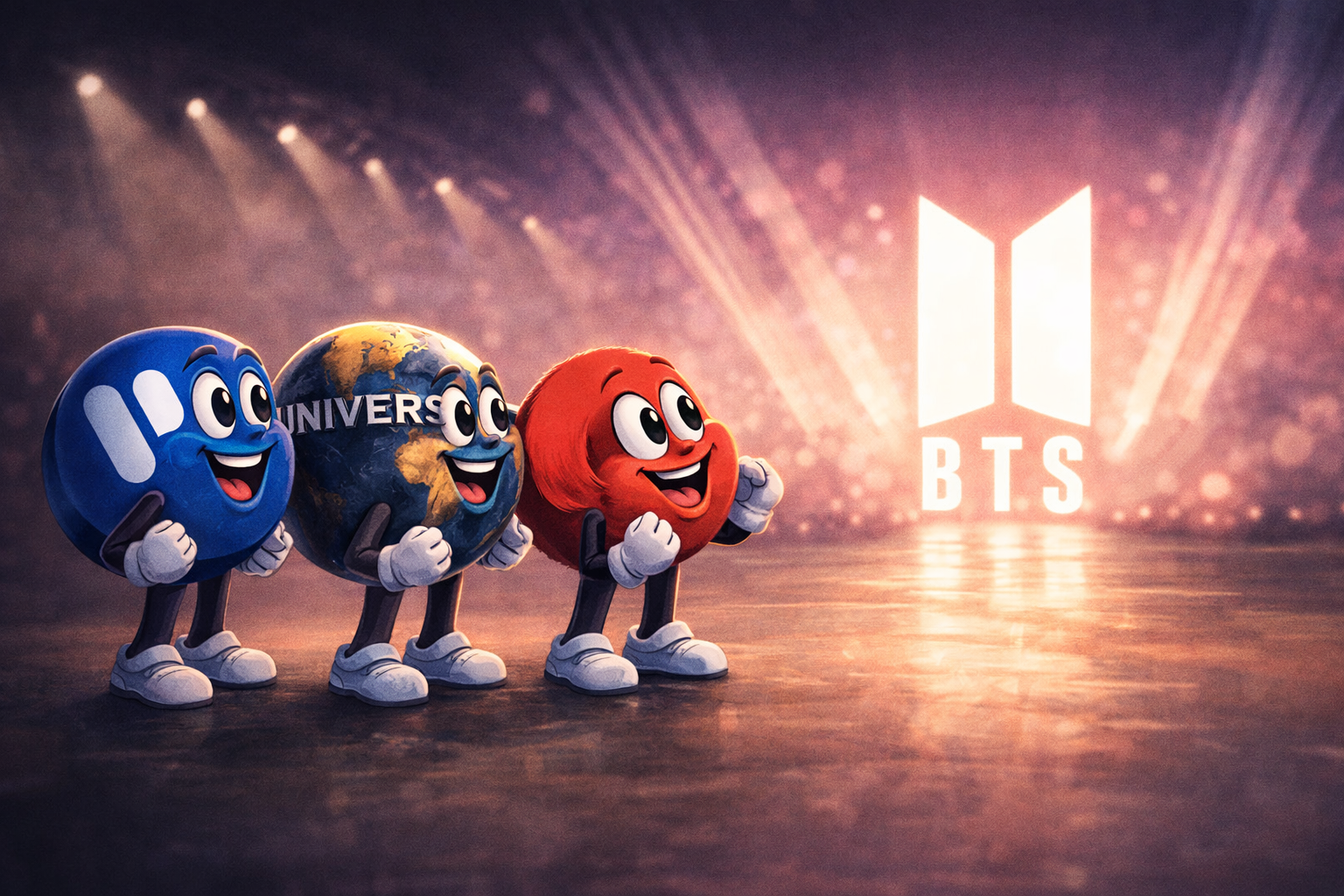
On March 20, 2026, Warner Music Group (WMG) announced an exclusive multi-year first-look deal with Netflix. The streaming giant will develop documentary series and films exploring the lives, music, and legacies of WMG’s legendary and contemporary artists and songwriters. Production will come through Unigram (run by Amanda Ghost and Gregor Cameron), with each project created in collaboration with the artists or their estates.
WMG’s massive catalog includes icons like David Bowie, Madonna, Fleetwood Mac, Led Zeppelin, Aretha Franklin, and Joni Mitchell, alongside current stars such as Charli xcx, Dua Lipa, Ed Sheeran, Bruno Mars, and Coldplay. CEO Robert Kyncl called it “an incredible opportunity to introduce new fans to our artists and songwriters all around the world,” while Netflix’s Adam Del Deo highlighted how music already inspires “incredible fandom” on the platform.
This isn’t WMG’s first move into long-form content. It follows reports from late 2025 that the label saw its vast IP as an “untapped resource” — essentially positioning itself as “Marvel for music.”
Warner isn’t alone. Universal Music Group (UMG) recently partnered with CNN for a docuseries hosted by Fred Armisen that dives into the world’s largest music archives. These label-level initiatives signal a strategic shift: major Western labels are institutionalizing high-quality, narrative-driven content as a core part of their ecosystem.
It’s a logical move.
It’s also not particularly new.
The BTS Template
The novelty isn’t the documentary itself. It’s the attempt to institutionalize it at the label level.
Instead of documentaries being artist-led, era-specific, or opportunistic, WMG is trying to systematize them—turning long-form storytelling into a repeatable pipeline tied to its entire roster.
This is where the comparison to BTS becomes unavoidable.
Because BTS didn’t do a one-off documentary of their most successful albums. They normalized them as part of the artistic cycle.
Long before Netflix entered the picture, BTS had already built a layered documentary ecosystem:
- Burn the Stage
- Bring the Soul
- Break the Silence
- Tour films, episodic series, behind-the-scenes archives
- Artist-led, raw documentation or reaction of their work.
While BTS has always put music at the centr of their career, they are better described as storytellers who use multiple channels and media to progress their narratives and encourage public participation.
The documentaries that were part of this process. They weren’t just retrospective explainers. They ran parallel to the music. Their documentaries expanded their art.
BTS and Big Hit have treated documentaries not as promotional add-ons, but as an integral part of the artistry itself. From Burn the Stage and Bring the Soul to Suga: Road to D-Day, j-hope IN THE BOX, and the recent Netflix doc BTS: The Return (which gives unprecedented access to the making of their comeback album Arirang), BTS has consistently used film to expand the emotional and creative depth of their work.
For BTS, docs aren’t just “behind-the-scenes” extras — they extend the narrative, reveal the creative struggles, the self-doubt, the triumphs, and the philosophy behind the music. They become another medium through which the artists express themselves. The result? A richer, more immersive world that turns casual listeners into deeply invested ARMY.
The Netflix live coverage of BTS’s comeback further proved the power of this approach. Now, the question for WMG, UMG, and other majors is clear: Will these new documentaries function primarily as marketing tools to boost streams and introduce catalogs to new audiences, or will they evolve into genuine artistic extensions — collaborative storytelling that adds real substance and longevity to the music?


BTS and the members have consistently released documentaries during and after each project.
The Superfan Chase: From Weverse to Western Experiments
This documentary wave is part of a larger fan-centered evolution. For years, labels (including UMG) have tried to build their own superfan platforms to replicate HYBE’s Weverse success. Weverse has grown into a powerful ecosystem with millions of monthly active users, turning casual fans into dedicated ones through direct communication, exclusive content, merch, and community features. Here are some of their efforts:
Universal Music Group: Betting on Infrastructure, Not a Single App
- Strategic investment in HYBE—and by extension, indirect exposure to Weverse’s ecosystem thinking
- Stake in BandLab Technologies, which blends creation, collaboration, and community
- Investment in Stationhead, enabling real-time fan listening parties and chart-driven engagement
- Acquisition of Dreamtonics, signaling future fan interaction through creation tools
- “Streaming 2.0” strategy: pushing platforms toward premium, high-engagement tiers rather than passive listening
UMG is attempting to embed itself across multiple fan touchpoints—audio, creation, community, and monetization.
Warner Music Group: Community, Gaming, and Direct-to-Fan
- Investment and partnerships with Discord for fan communities
- Early moves into Web3 fan platforms (including partnerships with OpenSea and blockchain-based fan experiences)
- Backing of Songkick to connect touring with fan data
- Direct-to-fan commerce through artist stores and bundled experiences
WMG has leaned into community infrastructure, but largely through external platforms rather than a unified ecosystem.
Sony Music Entertainment: Data and Fandom Intelligence
- Acquisition of The Orchard (earlier move, but foundational for artist-level data control)
- Investment in Fave (fan clubs, exclusive drops, experiences)
- Expansion of direct-to-consumer analytics and CRM tools across its roster
- Experimentation with metaverse and gaming integrations for fan interaction
Sony’s strategy has centered on understanding and segmenting superfans, rather than building a singular destination.
Learning Directly From BTS
What’s often overlooked is that Western labels aren’t just observing from the outside. They’ve actively moved closer to the source.
UMG’s investment into HYBE wasn’t just financial—it was informational. It provided a window into how BTS operationalized fandom:
- Continuous content cycles
- Integrated commerce (merch, memberships, exclusives)
- Direct artist-to-fan communication
- Narrative layering across formats
Weverse works because it sits on top of all of this. It’s the interface, not the engine.
That is where most Western attempts fall short. The Industry Is Finally Correcting Its Assumptions
For years, the working theory was simple:
Build the platform → the superfans will come.
The reality has been the opposite.
Build the relationship → the platform becomes useful.
This is why so many Western efforts feel fragmented. They’re technically sophisticated but behaviorally shallow. Fans show up for moments, not systems.
Recent campaigns suggest the industry is starting to adjust.
- Atlantic Records partnering with iHeartMedia and TikTok for synchronized, multi-platform album launches
- Real-time fan participation baked into releases (live chats, listening events, UGC integration)
- Longer campaign windows that extend beyond release week
What Remains to Be Seen
The WMG-Netflix partnership (and UMG’s parallel CNN project) could mark a genuine turning point for Western music. If executed with real artistic integrity — granting creators meaningful creative control and treating the documentaries as true extensions of the music rather than quick-hit promotional tools — these projects have the potential to deepen fan connections in lasting, meaningful ways.
If, however, they lean too heavily into campaign-driven marketing, the risk is that they’ll feel more like extended press kits than substantive art.
On paper, moves like Atlantic’s tightly synchronized iHeartMedia and TikTok album campaigns or WMG’s leap into long-form Netflix storytelling look like sophisticated upgrades. In practice, they remain largely transactional and campaign-focused. What’s still missing is true continuity — the kind that turns one-off releases into an ongoing, living artistic universe.
A Cultural Gap Beneath the Strategy
This is where the cultural difference becomes impossible to ignore. Western music culture has long been fiercely individual-centered: the artist as singular genius, the fan as consumer. In contrast, many East Asian (particularly Korean) music ecosystems are deeply community-centered. For artists like BTS, creating “for” the fans isn’t a marketing tactic or “selling out” — it’s embedded in their values and identity. The relationship is reciprocal, almost familial. Documentaries, variety content, fan meetings, and multi-media storytelling aren’t add-ons; they are natural extensions of who the artists are and what their art stands for.
The BTS Variable
And then there’s the obvious BTS factor. What HYBE and BTS have achieved goes far beyond smart promotion. Expanding their art across albums, documentaries, solo projects, and immersive narratives — telling complex stories that unfold across different media and demand emotional investment — requires genuine depth, substance, and courage. It’s the kind of innovation that risks isolating a significant portion of a potential fanbase: those who simply want to be entertained rather than invited to think, feel, and grow alongside the artists.
Western majors are clearly studying this model closely. From documentaries to interactive launches to superfan strategies, the industry is shifting away from passive consumption toward more active, emotional engagement. The era of treating music as isolated tracks is quietly fading. In its place is the promise of a more holistic, story-driven experience — where the art lives and breathes across albums, screens, communities, and beyond.
The Big Question
The big question now is whether Western labels will merely borrow the surface tactics of K-pop or commit to the deeper cultural and artistic mindset that makes it work.
The industry is moving away from treating music as isolated tracks and toward something more expansive—where the work lives across albums, screens, communities, and time.
The question now isn’t whether that shift will happen.
It’s whether the storytelling will be strong enough to sustain it.
Which raises a more immediate question:
When these documentaries arrive, will they feel like essential chapters of an artist’s work—or just another layer of promotion?
And which artist, across WMG or UMG’s roster, actually has the depth to carry that kind of storytelling?
