

Funded by BTS member SUGA’s ₩5 billion (approximately US$3.7 million) contribution, the Min Yoongi Treatment Center opened at Severance Hospital last year. It was created with an ambitious goal: to develop long-term, evidence-based therapies that help children and teenagers with autism spectrum disorder (ASD) build communication skills, confidence, and independence.
Now, the center is taking another major step.
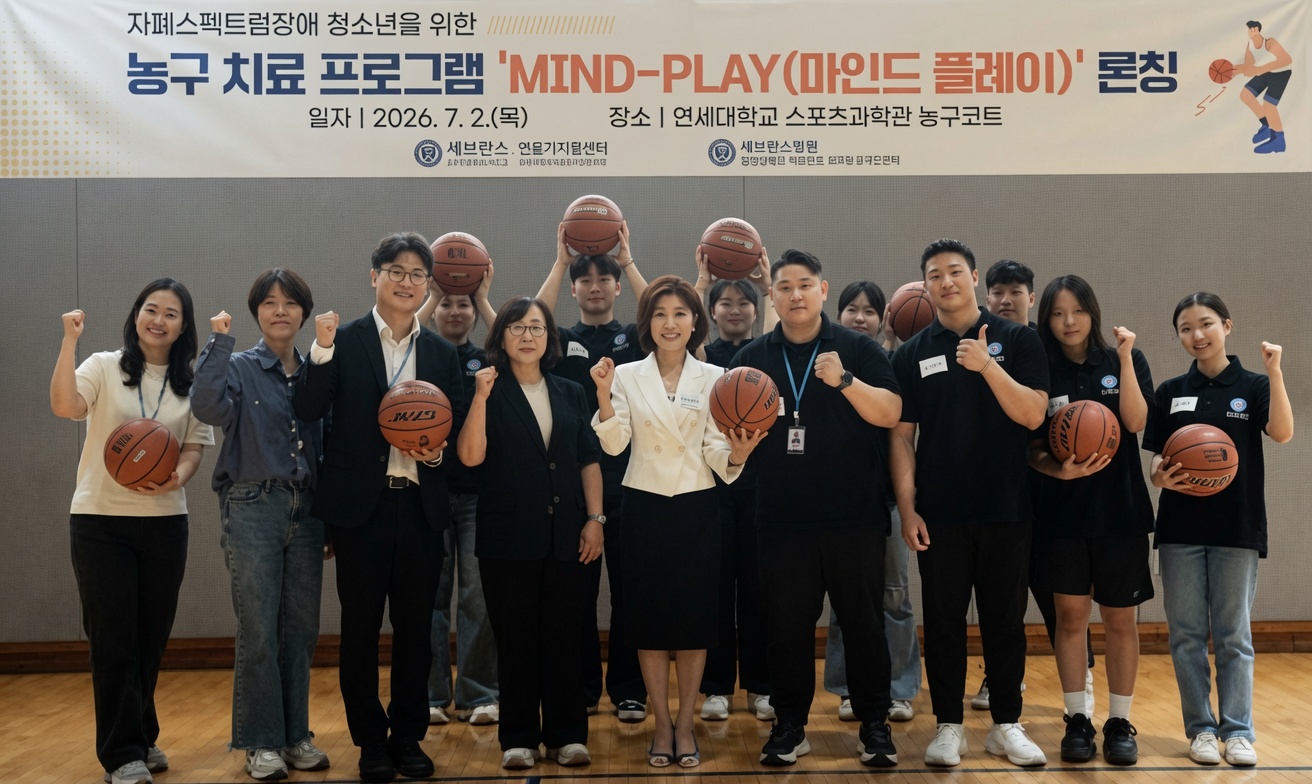
On July 3, Severance Hospital announced the launch of MIND-PLAY, a new basketball therapy program for adolescents with autism spectrum disorder. The initiative expands the center’s growing portfolio of therapies beyond music, reflecting a broader philosophy that social interaction can be nurtured through multiple forms of creative and physical expression.
From Music Therapy to Basketball
The Min Yoongi Treatment Center first gained international attention because of its innovative MIND Program, a music-based social skills therapy that SUGA personally helped develop alongside child psychiatrist Professor Cheon Geun-ah.
Rather than serving only as a donor, SUGA volunteered at the hospital for months, participating in weekend sessions where he played instruments, guided musical activities, and helped children communicate through rhythm, songwriting, and collaborative performances.
The program’s name—MIND—stands for Music, Interaction, Network, and Diversity, emphasizing music as a tool for emotional expression, relationship building, and social development rather than simply artistic instruction. Hospital officials reported encouraging early outcomes, with children who had previously struggled with verbal communication becoming more willing to express emotions and interact with peers.
Why Basketball?
The newest program shifts from the music room to the basketball court.
Developed in partnership with the Korean American Special Education Center (KASEC), MIND-PLAY adapts KASEC’s DRIB (Developmental Rehabilitation Integrated Basketball) model for use in South Korea.
The 12-week pilot pairs teenagers with autism spectrum disorder alongside trained volunteers during weekly 90-minute sessions designed to strengthen:
- social interaction
- teamwork
- physical coordination
- emotional well-being
- confidence and independence
For SUGA, who serves as an NBA Global Ambassador and has long spoken about his love of basketball, the expansion represents a natural extension of the center’s philosophy: using shared experiences—not just clinical treatment—to help young people connect with others.
Part of a Growing Global Movement
Basketball therapy itself is relatively uncommon, but sports-based interventions for autism have received increasing attention from researchers over the past decade.
Programs in the United States, Canada, Australia, and Europe have explored structured team sports—including basketball, soccer, swimming, and martial arts—as ways to improve communication, executive functioning, motor skills, and peer relationships among autistic children and adolescents.
The DRIB model developed by KASEC is one example of this broader movement, combining sports instruction with structured opportunities for social interaction. By adapting that model into MIND-PLAY, the Min Yoongi Treatment Center is bringing an internationally recognized framework into South Korea while integrating it into a hospital-based clinical setting.
A Center Built for the Long Term
Unlike many celebrity charitable projects that end with a donation, the Min Yoongi Treatment Center has continued to expand since its creation.
The center combines music therapy with language, behavioral, psychological, and developmental services while also conducting research aimed at developing evidence-based treatment methods for autism spectrum disorder.
Hospital officials have repeatedly emphasized that their long-term objective is not only to improve clinical outcomes, but also to create treatment models that can be replicated by other institutions and supported through future academic research.
ARMYs Have Joined the Mission
SUGA’s initiative has also inspired fans around the world.
Following the announcement of the Min Yoongi Treatment Center, Severance Hospital launched dedicated donation channels that allow supporters to contribute directly to the center’s work. International fan communities quickly organized fundraising campaigns, while hospital officials acknowledged receiving significant support from ARMY. Professor Cheon Geun-ah has said donations inspired by the project reached approximately ₩550 million (about US$400,000) in addition to SUGA’s original contribution.
Outside South Korea, fan-led initiatives have also emerged. In India, for example, BTS fans launched “Yoongi’s Healing Notes,” a fundraising campaign supporting music therapy for children with autism at a local treatment center, citing the Min Yoongi Treatment Center as their inspiration.
More Than One Program
The launch of MIND-PLAY suggests that the Min Yoongi Treatment Center is evolving into something much larger than a single music therapy initiative.
By combining music, sports, research, and multidisciplinary clinical care, the center appears to be building a broader model for helping autistic children and teenagers develop the social and life skills needed for greater independence—one that continues to grow well beyond the donation that made it possible.
