

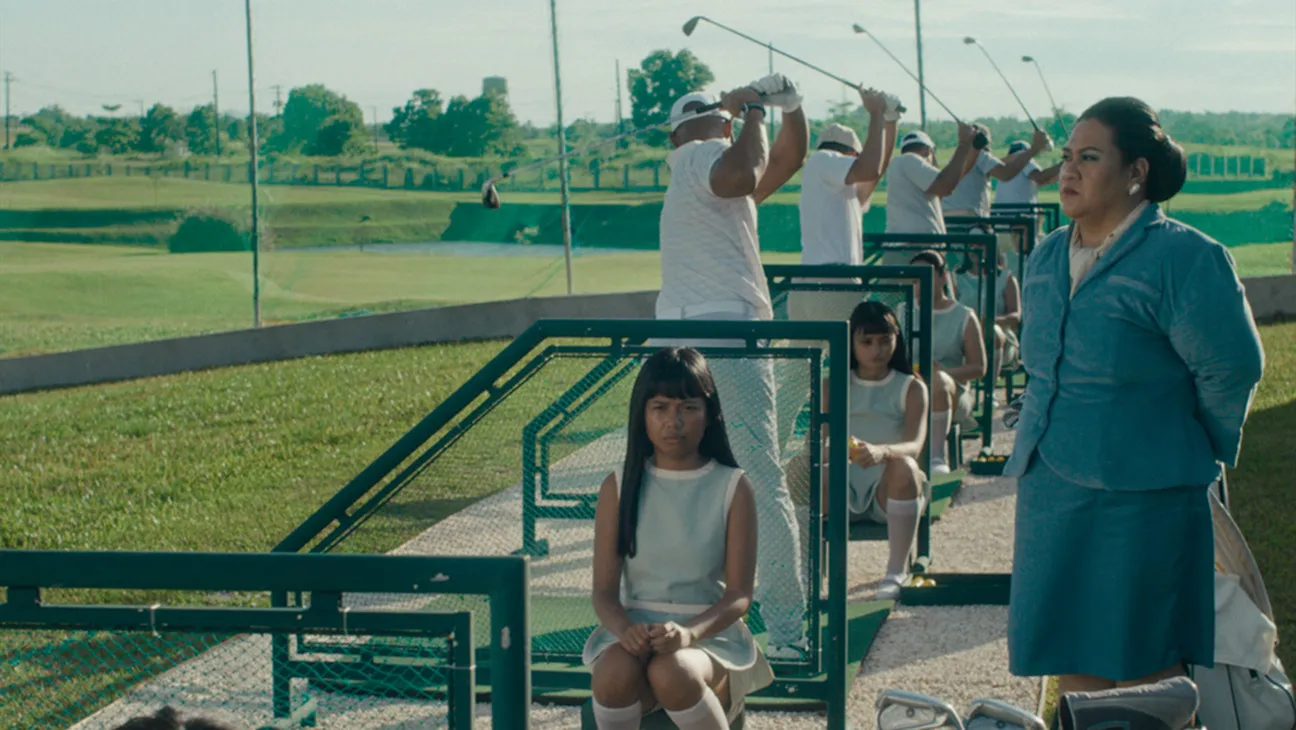
In the lush, manicured expanse of a Manila golf course, Rafael Manuel’s Filipiñana unfolds as a mesmerizing feature debut that peels back the veneer of privilege to reveal rot beneath. Premiering at the 2026 Sundance Film Festival, where it clinched the World Cinema Dramatic Special Jury Award for Creative Vision, this 100-minute drama follows 17-year-old Isabel (played by Johanna Bascon), a new “tee girl” at an exclusive country club.
Her role—placing balls on tees for wealthy patrons—quickly evolves into an obsession with the club’s enigmatic president, Dr. Palanca (Richard Quan), as she uncovers layers of corruption, misogyny, and historical trauma tied to the Philippines’ colonial past. Executive produced by acclaimed Chinese director Jia Zhangke, the film blends deadpan humor, Lynchian surrealism, and Haneke-like tension, transforming a seemingly mundane setting into a potent metaphor for societal ills.
Shot with vibrant colors and precise compositions by cinematographer Martika Ramirez Escobar, Filipiñana draws from Manuel’s 2020 short film of the same name, which first explored similar themes in a 24-minute format at the Berlinale. The feature expands this into a languid narrative, where everyday routines—like synchronized golf swings or fruit scattered on the fairway—take on ominous significance. It’s a story of quiet rebellion, where Isabel’s growing awareness disrupts the club’s rigid hierarchies, echoing broader critiques of capitalism and imperialism.
Standing Apart from Philippine Mainstream Cinema
Philippine cinema has long been dominated by mainstream fare from major studios like Star Cinema and Viva Films, which prioritize crowd-pleasing genres such as romantic comedies (Hello, Love, Goodbye), horror (Feng Shui), and action-dramas (BuyBust). These films often feature bankable stars, formulaic plots, and themes of love, family, or supernatural thrills, designed for box-office success in a market where Hollywood imports and local blockbusters compete fiercely. In 2025, the industry saw a post-pandemic rebound with total box office at around PHP 12 billion (about US$210 million), but domestic shares hovered at 30-40%, buoyed by hits like rom-coms and sequels.
Filipiñana, however, emerges from the independent scene, akin to works from festivals like Cinemalaya or QCinema. What sets it apart is its arthouse sensibility: a deliberate pace, minimalist dialogue, and surreal elements that prioritize atmosphere over plot twists. Unlike the escapist entertainment of mainstream movies, it confronts uncomfortable realities—class disparities, environmental hypocrisy (golf courses as “unnatural evils” devouring land and water), and the lingering scars of colonialism, from Spanish rule to American influence and Japanese occupation. Manuel’s film uses the golf course as a microcosm of feudal structures, where “tee girls” symbolize exploited labor in a patriarchal, elitist society.
This satirical edge, infused with visual invention and subtle dread, echoes international auteurs like Ruben Östlund (Triangle of Sadness) or Bong Joon-ho (Parasite), rather than the feel-good narratives prevalent in Philippine commercial cinema. It’s a bold departure, focusing on social critique without relying on star power or melodrama, making it a breath of fresh air in a landscape often criticized for predictability.
Reactions and Reviews: Acclaim for Its Subversive Style
Since its Sundance premiere, Filipiñana has garnered praise for its visual prowess and thematic depth, though some note its slow pacing as a hurdle. Critics highlight how it transforms the banal into the bizarre, building a “quiet dread” beneath a “cheery, colorful exterior.”
One reaction aptly captures this: it “digs into the unnatural evil that is the existence of golf courses, investigating their class disparities and environmental destruction with style. Really well shot and effectively paced, with a quiet dread hiding underneath its cheery, colorful exterior.”
The Hollywood Reporter calls it a “scathing account of inequality,” blending dark comedy with inventive visuals, sitting between Michael Haneke and David Lynch. IndieWire describes it as a “languid satire” exposing colonialism’s sinister history, with the golf course as a site where the rich “lord over the working class.”
Vulture praises its attention to details, where “the angle of a golf club can evoke suspense” and a “casual glance can take on the weight of a confession.” Collider notes echoes of The White Lotus in its class satire but critiques the “punishingly slow pacing,” leaving viewers “hungry” despite its feast for the eyes.
On Letterboxd, users echo this: one calls it a “winking anti-colonialist, anti-capitalist surreal wonder,” while another finds it “atmospheric” yet “frustrating” and “plodding.” IMDb reviews appreciate its “colorful, experimental” take on corruption and colonialism, with solid performances despite occasional “clunky” dialogue.


Film Festival Today gives it 4.5/5 stars for “exquisite cinematography” and a “sharp-edged critique,” evolving from gentle observation to biting commentary. The Wrap hails it as “mesmerizing and moving,” knowing “where the bodies are buried.”
Social media reactions on X emphasize its striking visuals and subversive themes. One user raves about its “fucking gorgeous” look, choreography, and exploration of U.S.-Philippines relations, calling it a highlight of Sundance. Discussions on Reddit note discrepancies between audience love and some critical pans, suggesting it resonates more with those attuned to its style. For the original short, Asian Movie Pulse lauds its “visually surreal” take on exploitation.
Overall, the consensus is that Filipiñana excels in atmosphere and ideas, though its deliberate tempo may divide viewers—perfect for those who savor subtlety over spectacle.
A Must-Watch for Thoughtful Viewers
Absolutely recommended, especially if you’re drawn to films that challenge norms and unpack societal layers with visual flair. Filipiñana isn’t for everyone—its slow burn and emotional distance might test patience—but for fans of indie cinema like Parasite or The Square, it’s a rewarding gem. It offers a fresh Philippine perspective on global issues, making it essential viewing for those interested in class critiques or colonial legacies. Stream it on platforms like JuanFlix (for the short) or catch the feature in festivals and upcoming releases—it’s a conversation starter that lingers long after the credits.
