

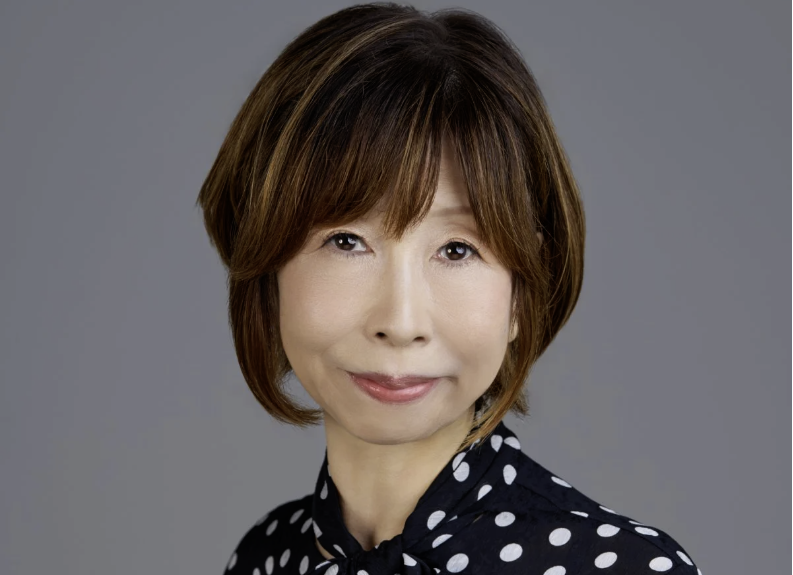
HYBE JAPAN has appointed veteran producer Michi Iijima as its new J-Pop Executive Producer, bringing one of Japan’s most influential entertainment architects into the company as it accelerates its push to create original Japanese acts and intellectual property. Iijima will continue serving as president of talent management company CULEN while taking on the newly created executive role.
The move is significant not simply because of Iijima’s reputation, but because of what she represents in Japanese entertainment. For decades, she helped redefine what an idol group could be.
The Producer Behind a National Phenomenon
Outside Japan, SMAP is often introduced as one of the country’s biggest boy bands. Inside Japan, however, the group’s influence is far larger than music.
During the group’s peak, SMAP became a cultural institution. They dominated music charts, television, advertising, film, and live entertainment. Members were household names across multiple generations, and the group’s long-running variety program, SMAP×SMAP, became one of Japanese television’s defining shows.
Much of that expansion has long been credited to Iijima’s management philosophy.
Rather than limiting idols to singing and concerts, she pushed them into variety television, comedy, dramas, films, commercials, and hosting roles. At a time when many idols were largely confined to music programs, Iijima helped create a blueprint where entertainers became omnipresent personalities whose careers extended far beyond albums. That strategy later influenced how many Japanese agencies developed talent.
Her approach wasn’t simply about making celebrities famous. It built emotional familiarity with the public. Fans didn’t only watch SMAP perform songs—they watched them cook, joke with comedians, interview guests, act in dramas, and appear in commercials nearly every day.
That kind of cross-platform visibility became one of the defining characteristics of Japanese idol culture.
More Than a Music Producer
HYBE JAPAN specifically said Iijima will combine her experience across film, television, and entertainment production with HYBE’s business platform to create new entertainment originating from Japan.
That wording reflects the breadth of her career.
Over several decades, Iijima helped oversee projects spanning:
- Television variety programs
- Drama productions
- Feature films
- Commercial endorsements
- Live concerts
- Talent branding and long-term career development
That experience could prove particularly valuable as entertainment companies increasingly compete for attention across streaming, television, gaming, short-form video, and social media.
Why Her Experience Fits HYBE’s Strategy
HYBE has repeatedly emphasized that it wants to build entertainment businesses rather than simply produce music.
Its expansion has included fan platforms, original intellectual property, gaming, webtoons, animation, documentaries, and immersive fan experiences.
Adding someone whose career was built around developing talent across multiple media fits naturally into that broader strategy.
Rather than importing a Korean production model into Japan unchanged, HYBE appears to be strengthening its understanding of Japan’s own entertainment ecosystem by bringing in one of the executives who helped shape it.
Japan and Korea Have Different Entertainment DNA
K-pop has become known for synchronized choreography, cinematic music videos, tightly coordinated visual concepts, and highly structured comeback cycles. Creative direction is often centered around albums, performance quality, and global digital marketing.
Japan’s idol industry has historically prioritized long-term relationships between artists and audiences. Television appearances, variety shows, radio programs, local events, stage performances, anime tie-ins, and gradual artist development have traditionally played a larger role in building public recognition.
The visual language differs as well.
K-pop frequently emphasizes polished, high-fashion aesthetics and globally competitive production values. J-pop has generally embraced greater stylistic diversity, with concepts ranging from traditional Japanese influences to anime-inspired worlds, theatrical performances, and everyday relatability.
Neither approach is inherently better—they simply evolved to serve different audiences and media environments.
What Iijima Could Bring to HYBE
That is where Iijima’s appointment becomes particularly interesting.
HYBE already possesses world-class expertise in artist training, music production, global marketing, and digital fan platforms.
Iijima brings decades of experience understanding how Japanese audiences consume entertainment beyond music.
If those strengths complement each other, HYBE JAPAN could develop artists who retain the distinctly Japanese characteristics that resonate domestically while benefiting from HYBE’s global production capabilities and international distribution network.
Rather than making J-pop more like K-pop, the appointment suggests HYBE is investing in making Japanese entertainment more globally competitive without losing the qualities that have long made it unique.
