

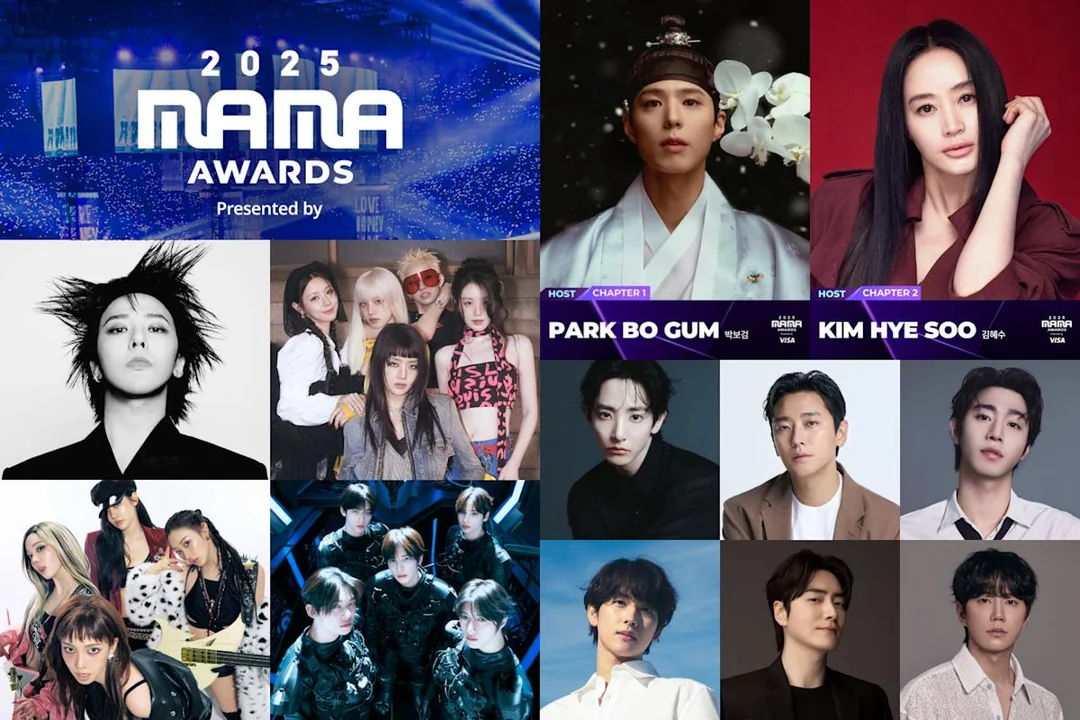
MAMA 2025 is over, and the dust hasn’t settled. The show delivered milestones, surprise wins, and a handful of moments that instantly triggered debates across fandoms, industry circles, and Korean entertainment forums. Here’s a clear, sober breakdown of the ten most contentious points dominating the conversation.
1. ENHYPEN’s Thank-You Speech and the “Product” Controversy
ENHYPEN’s Daesang win was already a historic moment—their first, and a fan-driven one, a sampler of their growing and maturing fanbase.
But their acceptance speech also caught attention. When they thanked BELIFT LAB’s CEO Kim Tae-ho and HYBE Chairman Bang Si-hyuk “for not treating us like products,” the auditorium understood the subtext immediately.
NewJeans and Min Hee-jin had made “product treatment” a public accusation against HYBE for months. No HYBE group had ever addressed the issue directly. LE SSERAFIM is the closest to do it but only dealt with their own struggles.
This made ENHYPEN’s remark the first open sign of support for the executives at the center of Min Hee-jin’s allegations and they did so graciously. They concentrated on the people they want to compliment, instead of mentioning anything about the other side.
Yet the statement didn’t diminish the magnitude of their achievement—breaking a streak held by BTS since 2018 and following Jimin’s solo win the year prior.
2. Stray Kids’ Long-Overdue Daesang
Stray Kids finally took home their first MAMA Daesang. STAYSs, their fans, are over the moon.
But it’s a little bittersweet. Many, even non-fans believe it’s long overdue. Their track record is undeniable: the group holds the record for the most consecutive albums debuting at No. 1 on the Billboard 200.
Their Maniac World Tour grossed $71.5 million from 776,000 tickets sold, and their current DOMINATE world tour is on track to become the best-selling K-pop tour of all time.
The controversy wasn’t about the win—it was the belief that Stray Kids had to conquer the global market before they get ther espect they deserve back at home?
They deserve more respect from their own country.
3. G-Dragon’s Artist of the Year Win
G-Dragon’s comeback has proven that his fanbase remains powerful enough to sell out his tour eight years after his last release.
The issue was MAMA’s scoring.
Based on public metrics, AESPA and SEVENTEEN were leading by wide margins. Yet GD won—prompting scrutiny of the judging process.
Because judges hold 20% of the Daesang scoring, it’s mathematically possible that he received full points from the panel.
What makes it worse is that this isn’t unprecedented: MAMA 2024 faced backlash when aespa’s Supernova won Song of the Year after mid-process “regional weight recalculations” overturned voting results and triggered a Korea Communications Commission review.
4. G-Dragon’s Vocals and the “Technical Issues” Debate
Every performer relies on backing tracks to some degree, but GD’s MAMA performance sparked unusually sharp commentary. Listeners noted over reliance on backing tracks, unstable pitch, uneven breath control, and moments where vocals all but disappeared.
His fans countered with audience-shot clips showing much cleaner audio, accusing MAMA of technical faults.
Many pointed out that this is not the first, 2nd or 10th time G-Dragon’s live performance has been less than stellar.
Veteran fans provided a different perspective: This has always been GD’s style, tethering at the edge of abandon, sort of rap-vocal hybrid style. His performances are more a show rather than a display of vocal abilities, a lot of swagger, like a king who knows he doesn’t need to give as much effort because, well, he is king.
It’s the ultimate YG blueprint.
That was considered cool in the late 2000s and early 2010s, but trends have shifted dramatically. His approach can feel out of sync with contemporary vocal standards—but also represents a decision to maintain creative identity rather than chase prevailing styles.
Maybe GD refuses to change the style that captivated an entire generation to him?
5. BABYMONSTER’s “Golden” Performance Controversy
BABYMONSTER’s cover of “Golden” was meant to be a showcase moment, but Ahyeon’s high note became the focal point of debate.
Many praised the mere fact taht she attempted it and her undeniable stage charisma.
However, others said the note sounded more like a scream than controlled singing. Vocal coaches weighed in online, warning that repeated strain could damage her cords and calling for refinement before major live events with unforgiving audiences.
The moment became a flashpoint for the broader conversation about idol vocal training.
6. 5th-Gen Live Performance Standards: IZNA, MEOVV, and CORTIS
Despite the criticisms of certain acts, three rookies became unexpected highlights.
IZNA delivered near-perfect synchronization—fans joked one member had been “copy-pasted” six times. Choi Jung-eun held her lines steady while executing heavy choreography, settling the mic-on debate early.
Many are already betting on them as the wildcard, coming from a smaller agency, they could dominate given the right material and opportunities.
MEOVV brought Teddy’s trademark “glossy” production style but elevated it with unusually refined live vocals for a group their age. Their stage earned praise for stability; fans highlighted the group’s balance between visuals and disciplined vocal technique.
They certainly have the high end fashion down to a tee. It’s just a matter of honing what they have and exploring beyond the usual Teddy aesthetic and sound.
CORTIS, HYBE’s four-month-old boy group, delivered the night’s most technically intriguing performance. Leader Martin began by looping beats live onstage—controlling more than 20,000 synced lightsticks—before joining the members for a rock rendition of Fashion, complete with headbanging and ad-libs over clean live vocals. Their polish exceeded that of many older groups and fueled discussion about HYBE’s “creator-crew” experiment.
Many believe that they may be ahead of their time in KOREA but perfect for the global Gen Z and Gen Alpha generations. Could they be the next big global group?


7. Super Junior’s Tribute Stage Fell Short of Their Legacy
Super Junior received the Inspiring Achievement Award, a long-overdue acknowledgment of a group that reshaped the architecture of modern K-pop. Their live vocals and choreography showed they still commanded a stage two decades into their career.
But fans argued MAMA undercut the moment with an uninspired stage design. For a group that pioneered subunits, global rotations, and pan-Asian expansion, this could have been a retrospective celebration of their impact. Instead, the performance felt compressed and conceptually thin—an opportunity wasted.
Maybe putting more videos on screen, integrating the storytelling in between the songs may have given the younger market a better idea of the impact Super Junior made and to be honest, the recognition is long overdue.
8. Overall Lackluster Performances
MAMA canceled several high-production stages out of respect for the tragic Hong Kong fire days before the show, and while the decision was understandable, the remaining stages felt flat.
Only one 2nd-gen group performed, and the absence of major 3rd-gen names like NCT and SEVENTEEN fueled suspicions.
Many believe that the consistent question about MAMA’s credibility and all the evidence that work against them prove that the recognition doesn’t hold as much weight as it used to. Veteran groups no longer feel compelled to attend a ceremony where award results are routinely questioned and categories keep multiplying.
9. The “Useless Awards” Problem
Another recurring complaint was MAMA’s increasing roster of trophies that felt disconnected from musical merit.
Favorite Rising Artist existed alongside Rookie of the Year, with no meaningful differentiation when the former was given to a rookie group.
Olive Young K-Beauty Artist rewarded brand synergy instead of creative output.
Music Visionary of the Year and Breakthrough Artist were framed as prestige honors yet defined with such vague parameters that fans were left guessing whether the criteria were influence, trendiness, or internal industry narratives.
The proliferation of categories reinforced the belief that MAMA is prioritizing sponsor visibility and vote-driven engagement rather than establishing a consistent standard for excellence.
10. MAMA’s Credibility Questioned—Again
The combination of questionable results, absent major acts, muted performances, and the avalanche of new award categories led to one widespread sentiment: MAMA is drifting away from its original purpose.
In trying to appease agencies, secure sponsorships, and maintain voting participation, the ceremony is losing the prestige that once made it the definitive year-end benchmark.
With veterans stepping back and rookies carrying the show, MAMA 2025 felt less like a celebration of K-pop’s peak achievements and more like an event struggling to define its identity.
A Ceremony Losing Its Center of Gravity
MAMA has always walked a tightrope between being a genuine industry barometer and a business built on partnerships, voting traffic, and agency relationships. But 2025 exposed how fragile that balance has become. In trying to satisfy every company with stage time, rookie exposure, and an ever-widening catalog of consolation awards, the show has started eroding the one thing an awards ceremony cannot afford to lose: credibility.
The absence of major acts was the clearest warning. When groups with global influence no longer feel compelled to attend, it signals that the ceremony’s symbolic weight is fading. The message is simple and uncomfortable—there is no “need” for MAMA anymore if prestige stops being part of the equation. Agencies will continue to send rookies because they need the exposure, but the upper echelon—the artists who can fill stadiums without relying on weekly-show machinery—will quietly drift away.
MAMA’s challenge now is structural. It must recalibrate how it balances business with authority. An award show can be commercial—every major ceremony is—but it has to anchor the commercialism in a framework audiences trust. When sponsorships dictate categories, when results repeatedly contradict public metrics, and when the show bends too visibly to agency demands, the brand loses the long-term value it’s trying so hard to protect.
If MAMA wants to remain relevant five years from now, it will need to decide what its core identity is: a platform for genuine artistic recognition or a rotating showroom for whichever acts broadcasters need in their weekly lineups. It cannot sustain both without clearer boundaries. And the longer this tension goes unresolved, the more the ceremony risks becoming exactly what fans fear—an event that generates content, but no longer commands respect.
