

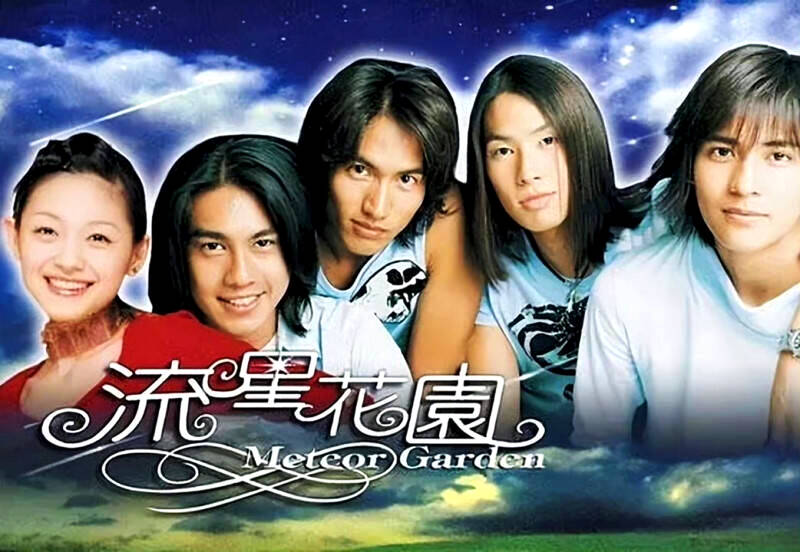
For an entire generation of Asian drama fans, few titles carry as much nostalgic weight as Meteor Garden.
Long before K-dramas dominated Netflix and before streaming made international content easily accessible, Meteor Garden was one of the shows that introduced millions of viewers across Asia—and eventually around the world—to the addictive formula of elite schools, wealthy heirs, underdog heroines, and larger-than-life romance.
Now, the franchise is returning once again.
On June 10, producers announced a new adaptation titled Meteor Shower Returns, launching a global casting call for its lead roles. The upcoming series will be produced as a short-form drama consisting of 24 episodes, each running approximately 20 minutes. The project was previously unveiled as part of Mango TV’s 2026 drama lineup.
But this isn’t just another remake announcement.
It raises a much bigger question:
Can one of Asia’s most influential romance franchises be successfully updated for a generation that views relationships, gender roles, and power dynamics very differently than audiences did twenty years ago?
The Story Started With a Manga
Many viewers know Meteor Garden. Fewer know where it came from.
The franchise traces its roots back to the Japanese manga Boys Over Flowers (Hana Yori Dango), created by manga artist Yoko Kamio.
First published in the early 1990s, the manga became one of the best-selling shojo series of all time, selling tens of millions of copies and spawning multiple adaptations across Asia.
Its premise was simple but irresistible.
An ordinary girl enters an elite school dominated by four wealthy and powerful young men. Conflict turns into romance. Class differences collide with personal growth. Chaos follows.
The formula proved so successful that nearly every major entertainment market in Asia eventually created its own version.
One Story, Many Countries
Taiwan’s Meteor Garden in 2001 became a regional phenomenon and helped launch the careers of the members of F4.
Japan followed with its own adaptation, Hana Yori Dango, which became one of the country’s most beloved romance dramas.
South Korea later produced Boys Over Flowers in 2009, starring Lee Min-ho, a role that helped transform him into one of Asia’s biggest stars.
China eventually created Meteor Shower, its own localized version of the story, which later became one of the defining youth dramas of its era.
Even decades later, new adaptations continue to emerge because the core fantasy remains remarkably durable.
The question is whether modern audiences still embrace all aspects of that fantasy.
Why This Remake Is Different
According to the newly released synopsis, Meteor Shower Returns will not simply retell the original story.
The series introduces a more self-aware heroine, Chu Yuxun, who realizes she appears to be trapped inside a predetermined romantic narrative.
Instead of immediately pursuing love, she focuses on education, personal ambition, and controlling her own future.
The production has also emphasized themes such as female empowerment, contract relationships, and self-determination alongside more traditional romance elements.
Many of the elements that made earlier versions successful have become subjects of criticism in recent years.
The classic rich-boy-poor-girl romance, aggressive male leads, power imbalances, and possessive behavior that once fueled dramatic tension are increasingly viewed through a different lens by younger audiences.
A modern adaptation must balance nostalgia with changing expectations.
Too much modernization and longtime fans may feel the franchise has lost its identity.
Too little, and new viewers may reject storylines that feel outdated.
The Real Challenge
What makes Meteor Shower Returns interesting is not whether it will attract nostalgic viewers.
It almost certainly will.
The bigger question is whether the franchise can do what very few long-running romance properties successfully accomplish:
Evolve without losing what made people fall in love with it in the first place.
The original Meteor Garden helped define an era of Asian television. Its influence can still be seen in countless dramas released today.
Now, more than two decades later, a new generation is about to decide whether that story still works—or whether it needs to be rewritten for a different world.
Either way, one thing is certain.
When the words “Meteor Garden” appear in a headline, people still pay attention.
