

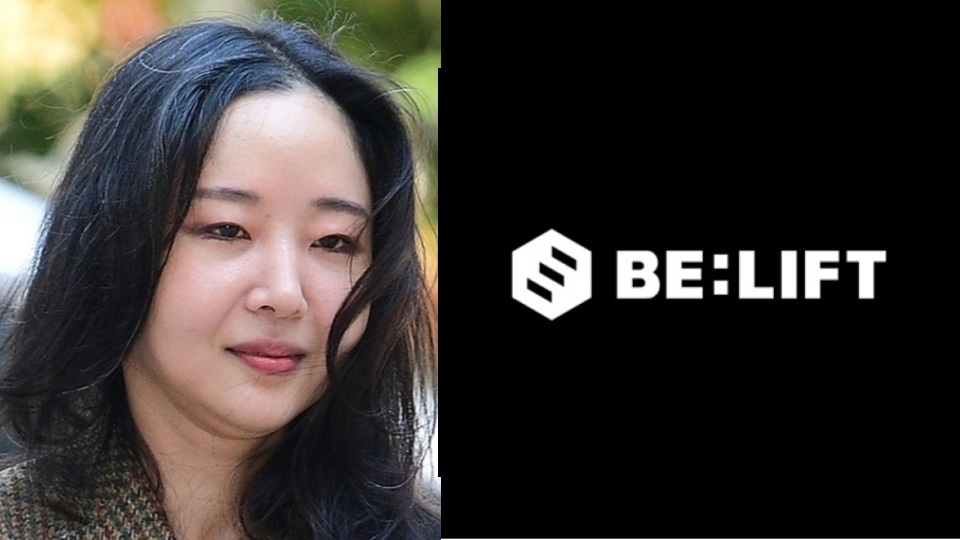
The hearing for the defamation case BELIFT LAB filed against Min Hee-jin resumed. BELIFT LAB’s ₩2 billion (approximately $1.45 million USD) damages lawsuit against Min, filed after her explosive April 2024 emergency press conference, where she publicly accused HYBE labels of copying NewJeans.
During that now-infamous livestreamed press conference, Min directly called out BELIFT LAB, asking:
“Why did you use our choreography, BELIFT LAB?”
BELIFT focused on malicious intent, emphasizing that past kakaotalk messages and other documents demonstrated that Min Heejin planned defaming ILLIT, in order to devalue the value of HYBE and ADOR. That would give her the opportunity to negotiate an exit from the company and bring New Jeans with her.
Min heejin’s defense, on the other hand, emphasized that what Min Heejin did in the press conference and everything else after are covered by free speech and was merely expressing an opinion.
Did Min Heejin’s Lawyers State The Press Conference Was Held As Retaliation Against Hybe’s Withc Hunt?
Min Hee-jin did not call it “retaliation.” They are positioning it as self-defense.
Their argument is essentially:
- HYBE publicly accused her of attempting a management takeover or corporate coup.
- She became the target of intense media scrutiny and public criticism.
- She made her accusations of ILLIT copying New Jeans public to explain the motive of HYBE for auditing her
- Therefore, according to her side, those comments were reactive and defensive rather than part of a calculated attack campaign.
The defense also emphasized that public comparisons between ILLIT and NewJeans already existed before Min ever addressed them herself
Min’s side also argued that even if her statements were controversial, they did not constitute false factual claims and should therefore remain protected as opinion.
BELIFT LAB: “ILLIT Became a Strategic Target”
One of the company’s central arguments is that Min, as one of the K-pop industry’s most experienced creative executives, fully understood the consequences of publicly accusing another rookie group of “copying.”
According to BELIFT LAB, this case is not fundamentally about copyright infringement itself. Instead, the company argues Min knowingly used language capable of inflicting reputational and commercial harm in an industry where branding, identity, and originality are core business assets.
BELIFT LAB also criticized the structure of Min’s original press conference, arguing that holding it as a YouTube livestream with assembled reporters demonstrated planning and intent rather than emotional spontaneity.
Min’s comments were not spontaneous emotional reactions but part of a broader strategy tied to alleged attempts to separate NewJeans from HYBE.
BELIFT LAB argued:
“The core of this case is the defendant’s actions carried out to pursue personal interests and pressure the parent company.”
The company further alleged that KakaoTalk messages and other materials show prior coordination involving reporters and NewJeans’ parents.
For clarity, here are some of the Kakaotalk Messages of Min Heejin with former ADOR staff members that prove she has been making plans to take over separate ADOr from HYBE, take New Jeans with her, and destroy the reputation of HYBE.
These have been submitted to the court, accepted as evidence, and made public. All court decisions involving Min, even the ones that favored her, acknowledged that she attempte separate from HYBE and take New Jeans with her.


All these messages were sent between late 2021 to April 2025.
HYBE audited ADOR April 22, 2024.
Min Heejin objected to these being accepted, citing her privacy rights being violated. However, a Korean court accepts private communications to be legally admissible if at least one party is aware the conversation is being recorded and submitted. It also weighs the importance of communication in a legal case. Seoul court stated that in this case, the kakaotalk messages are relevant and important.
BELIFT LAB also claimed previous rulings in related shareholder agreement disputes already recognized that some of Min’s earlier statements were false.
Claims of “Witch Hunt” and Industry-Wide Comparisons
The defense emphasized that these conversations were merely hypothetical discussions or private thoughts rather than evidence of actual coordinated action.
According to the defense:
“None of them were ever actually carried out.”
In Min Hee Jin’s put options case against HYBE, which Min won, the court stated that Min actually tried to take ADOR and New Jeans out of HYBE. However, since she didn’t succeed, there was no material damage.
The court also stated that the contract does not include anything about an attempt. Therefore, Min didn’t violate the contract.
The Battle Over Reputation, Not Copyright
One of the most important aspects of the lawsuit is BELIFT LAB’s repeated insistence that this is not technically a copyright case.
The company argues the issue is not whether choreography or concepts were legally plagiarized, but whether Min deliberately used accusations of copying in a way that damaged ILLIT’s image.
In reference to the PROJECT 1945 document, BELIFT LAB claimed that internal discussions existed about spreading “ILLIT plagiarism” narratives to securities analysts and using allegations involving “sajaegi” — the Korean term often used for chart manipulation or bulk-buying accusations — against HYBE labels.
The company also argued that KakaoTalk evidence suggests Min spent a long period searching for a HYBE label to target before ultimately focusing on ILLIT.
BELIFT LAB further criticized Min’s side for failing to adequately rebut choreography comparisons involving NewJeans and other HYBE groups, including GFRIEND.
A Lawsuit That Reflects a Much Larger Industry Conflict
What began as a public dispute over similarities between two girl groups has now evolved into one of the most symbolically important legal battles in modern K-pop.
The case touches on far larger questions:
- how much legal protection creative identity should have in K-pop,
- whether public accusations of copying can constitute reputational harm even without copyright infringement,
- and how power struggles inside major entertainment companies spill into public narratives involving artists themselves.
The conflict is also deeply tied to the larger collapse of the relationship between HYBE and Min Hee-jin, which has since fractured into multiple lawsuits involving ADOR, Source Music, BELIFT LAB, NewJeans members, shareholder agreements, contract disputes, and fiduciary duty claims.
The next hearing in the BELIFT LAB vs. Min Hee-jin lawsuit is scheduled for July 10.
A Lawsuit That Reflects a Much Larger Industry Conflict
What makes these cases important is that they are starting to move beyond a fight between HYBE and Min Hee-jin. They are gradually becoming a test of where South Korea intends to draw the line between reputation protection, media strategy, criticism, and public discourse in the entertainment industry.
In the United States, public figures generally face a much higher threshold when claiming reputational harm. American courts have historically given broader protection to speech involving celebrities, corporations, politicians, and other public personalities because of the country’s strong emphasis on free expression and public interest debate. Criticism can be harsh, speculative, aggressive, and even unfair, yet still fall under protected speech unless it crosses into provably false statements made with actual malice. Public visibility comes with reduced privacy and higher scrutiny.
South Korea operates differently, both culturally and legally. Reputation protection carries far greater weight, and defamation laws can apply even when statements are true if the court determines they unnecessarily damaged someone’s social standing. That difference matters enormously in an industry built on image, fandom, and commercial trust.
Part of that difference also comes from history. South Korea’s modern entertainment industry is relatively young in its current globalized form. While Korean film, television, and music existed long before, the modern idol system and the export-focused “Hallyu” industry largely accelerated after democratization in the late 1980s and especially through the 1990s and post-1997 Asian financial crisis era. The loosening of censorship after the end of authoritarian rule in 1987, combined with later state investment into cultural exports, helped create the ecosystem that eventually produced K-pop as the world now knows it.
Because the industry evolved so quickly — from a tightly controlled domestic entertainment system into a multi-billion-dollar global cultural export — many of the legal and ethical boundaries surrounding media manipulation, fandom mobilization, online commentary, leaks, and reputational attacks are still developing in real time.
That is why these lawsuits may become foundational precedents.
The courts are not only being asked whether certain contracts were breached or whether internal disputes became public. They are also indirectly being asked:
- How far can executives go in shaping media narratives?
- When does criticism become coordinated reputational sabotage?
- How much responsibility do journalists and creators have when amplifying allegations?
- What level of scrutiny should globally famous idols and entertainment executives be expected to tolerate?
And where is the line between whistleblowing, public interest reporting, strategic PR warfare, and defamation?
Those questions extend far beyond HYBE, ADOR, NewJeans, ILLIT, or LE SSERAFIM.
They will affect journalists, YouTubers, entertainment commentators, fandom-driven accounts, anonymous forums, and even ordinary social media users discussing public figures online. In many ways, South Korea is now confronting the legal growing pains that emerge when a once-domestic entertainment industry transforms into a global media power operating in an internet environment that moves faster than traditional reputation law was designed to handle.
