

If your experience with Vietnamese cinema mostly begins and ends with war dramas or festival films, Netflix currently has two titles that show a very different side of the industry: emotionally messy modern relationships, sharp social observations, big commercial storytelling, and a style of humor and melodrama that feels distinctly Southeast Asian rather than just “Korean drama adjacent.”
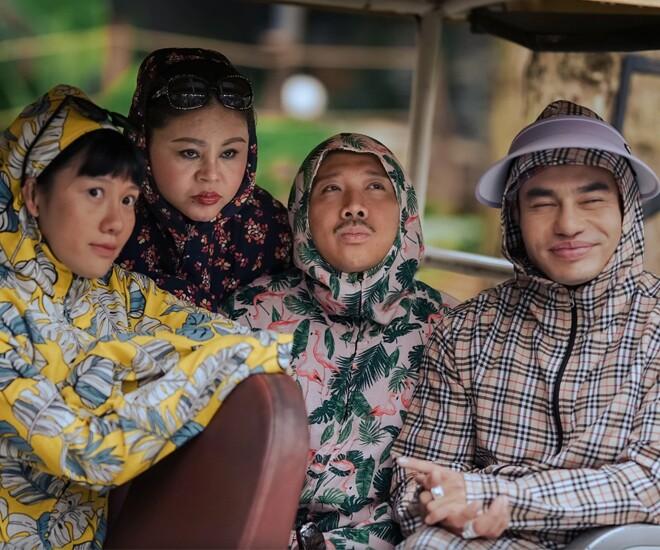
The 4 Rascals
At first glance, The 4 Rascals looks like a chaotic comedy about four wildly different personalities constantly getting themselves into ridiculous situations. And yes, it absolutely has that energy. The film is loud, colorful, fast-moving, and full of the kind of humor that comes from people making terrible emotional decisions in real time.
But underneath all the comedy is a surprisingly relatable conflict about friendship, loyalty, and the complicated ways people interfere in each other’s love lives while convincing themselves they are “helping.”
The story follows a group of longtime friends who become deeply entangled in a messy romantic situation involving suspicion, misunderstandings, jealousy, and emotional manipulation. What makes the film entertaining is that nobody is entirely mature, entirely innocent, or entirely rational. Everyone thinks they are the smartest person in the room while simultaneously making everything worse.
And that’s where the movie becomes addictive.
Instead of building toward one giant mystery or twist, the tension comes from watching relationships slowly spiral out of control through tiny emotional decisions: secret meetings, bad assumptions, pride, revenge, and the refusal to communicate honestly.
The film also captures a very modern urban Vietnamese energy — stylish cafés, nightlife, cramped emotional confrontations, social media-era romance, and the feeling that everybody is constantly observing everybody else’s relationships.
Tonally, it moves fast. One moment it feels like a pure comedy, the next it becomes unexpectedly emotional or painfully awkward. That unpredictability is part of the appeal. It understands that modern relationships are often absurd and emotionally exhausting at the same time.
If you enjoy ensemble relationship dramas where every character keeps making things worse in entertaining ways, The 4 Rascals is extremely easy to binge.


Mai
Mai is a completely different experience.
Where The 4 Rascals is chaotic and socially energetic, Mai is intimate, emotional, and quietly devastating in places.
The film centers on Mai, a woman nearing middle age who has spent most of her life surviving rather than truly living. She works tirelessly, carries the weight of other people’s judgments, and exists in a society that often treats women like her as if their value has already expired once they pass a certain age or social image.
Then she meets Duong — a younger man who unexpectedly enters her life with warmth, sincerity, and emotional openness.
And that’s where the real conflict begins.
Because Mai is not simply asking whether two people can fall in love. It asks whether someone who has spent years being emotionally wounded can even allow themselves to believe they deserve happiness anymore.
The relationship becomes controversial not only because of the age difference, but because the people around them constantly project assumptions onto Mai. The film explores gossip, class perception, loneliness, respectability, and the cruelty of public judgment in ways that feel painfully real.
What makes Mai stand out is that it refuses to glamorize emotional healing. Trauma does not disappear because somebody kind appears in your life. Past humiliation continues to shape how Mai reacts to affection, trust, and vulnerability. Even when happiness is directly in front of her, she struggles to accept it.
There’s also something very specifically Asian about the emotional tension in the film — the pressure of appearances, neighborhood gossip, family expectations, and the idea that personal happiness is often treated as secondary to social acceptability.
Visually, the movie leans warmer and softer than a lot of contemporary melodramas, which creates an interesting contrast with how emotionally heavy parts of the story become.
And that emotional sincerity clearly connected with audiences. Mai became one of the biggest box office successes in Vietnamese film history, which says a lot about how strongly the story resonated locally.
Together, these two films are a good introduction to how commercially confident Vietnamese cinema has become in recent years. The industry is increasingly comfortable making stories that are emotional, funny, messy, romantic, socially observant, and unapologetically local without trying to imitate Hollywood structure beat-for-beat.
