

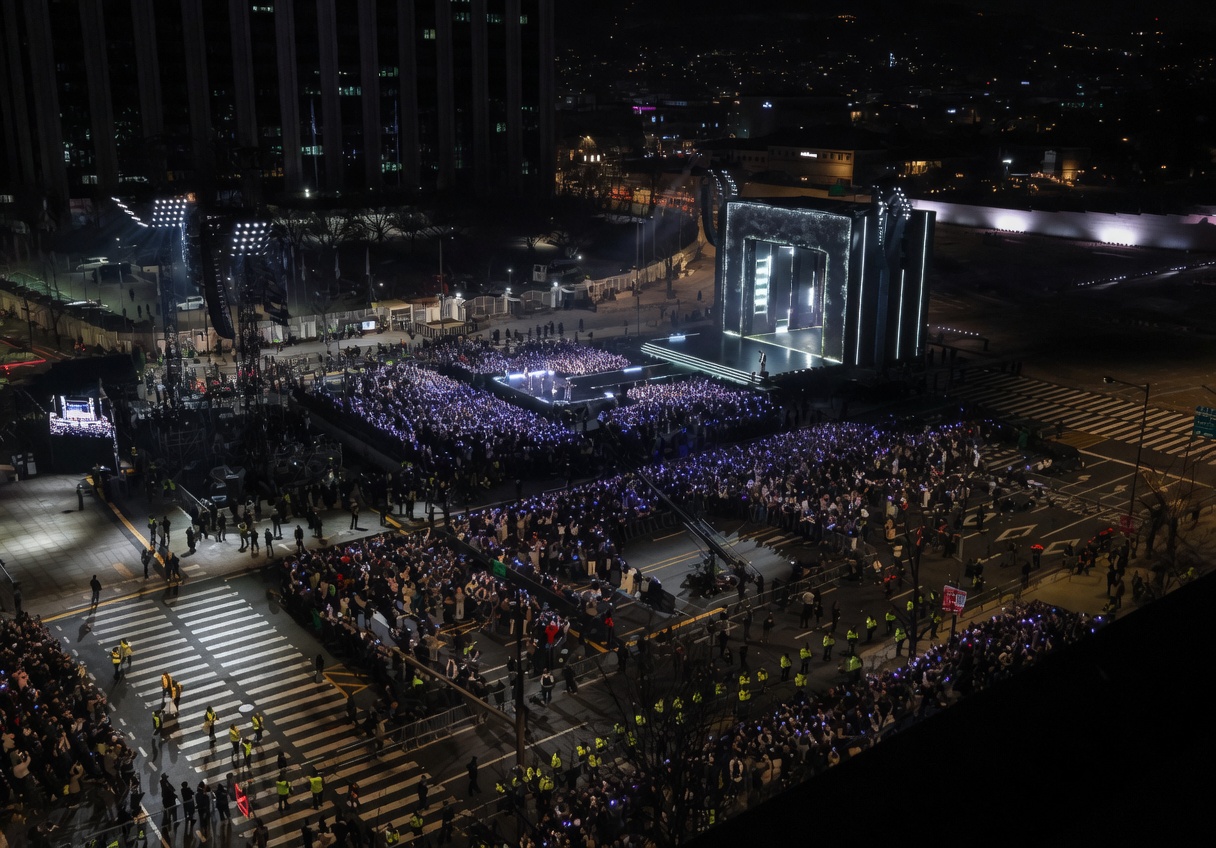
South Korean police are taking the unusual step of pursuing financial damages against a man convicted of making online threats to carry out an arson attack ahead of BTS’s highly anticipated comeback concert at Gwanghwamun Square earlier this year.
According to authorities on June 15, the Seoul Metropolitan Police Agency plans to file a damages claim of approximately 2.28 million won (about $1,650 USD) against a man in his 50s identified only by his surname, following his conviction for posting threatening messages online before the event.
The move comes after the man was found guilty of public intimidation and sentenced last month to a suspended prison term.
Threats Posted Days Before BTS Event
The incident occurred on March 19, just two days before BTS’s free public concert at Seoul’s Gwanghwamun Square.
At the time, local authorities had begun announcing traffic-control measures and crowd-management plans for the event, which was expected to draw tens of thousands of fans.
According to investigators, the defendant responded to an Instagram post discussing those traffic restrictions with a series of threatening comments.
Among the messages was one stating that he would fill a plastic water bottle with gasoline and throw it at the venue.
Police later determined that the man had posted a total of 22 threatening comments across social media platforms. Some messages allegedly claimed the concert venue would become a “sea of fire” and suggested he intended to set the area ablaze.
The threats prompted an immediate police response and heightened security concerns surrounding one of the largest public entertainment events held in Seoul this year.
Arrested Within Hours
Authorities moved quickly after receiving reports of the online posts.
Police traced the source of the messages and arrested the suspect within approximately five hours of the threats being reported.
Investigators later referred the case for prosecution, arguing that the comments posed a serious risk to public safety regardless of whether the suspect intended to carry them out.
During questioning, the defendant reportedly claimed he never planned to commit an actual attack and had posted the messages simply to attract attention online.
Court Hands Down Suspended Prison Sentence
On May 12, the Seoul Northern District Court sentenced the man to:
- 10 months in prison
- A two-year suspended sentence
- 200 hours of community service
- Probation supervision
In its ruling, the court stated that the threats created significant public anxiety and disrupted public order.
The judge noted that large-scale public events require extensive safety planning and that threatening violence against such gatherings can generate widespread fear among attendees, organizers, and local residents.
However, the court also considered several mitigating factors, including the defendant’s admission of guilt, expression of remorse, and the fact that he had reportedly not committed any criminal offenses in approximately 25 years.
Police Now Seeking Compensation
The criminal sentence may not be the end of the matter.
Police announced that they intend to seek approximately 2.28 million won in damages from the defendant to recover some of the public costs associated with responding to the threat.
The amount is believed to reflect expenses incurred during the investigation and emergency response process, including manpower and resources mobilized after the posts were discovered.
While criminal prosecutions for online threats are common, civil claims seeking reimbursement for law enforcement costs are less frequently publicized, making the case notable.
The action suggests authorities are increasingly willing to pursue both criminal and financial penalties against individuals who post threats targeting large public events.
A Warning About Online Threats
The case highlights growing concerns among law enforcement agencies worldwide about threats made on social media, particularly those directed at concerts, sporting events, and other large public gatherings.
Even when a threat is ultimately determined to be a hoax, authorities are often required to treat it as credible until proven otherwise, triggering investigations, security reviews, and emergency-response measures.
By seeking financial compensation in addition to securing a criminal conviction, South Korean authorities appear to be sending a broader message: online threats are not harmless jokes, and those responsible may be held accountable not only in criminal court but also for the public costs their actions create.
The damages claim is expected to proceed separately from the criminal case.
