

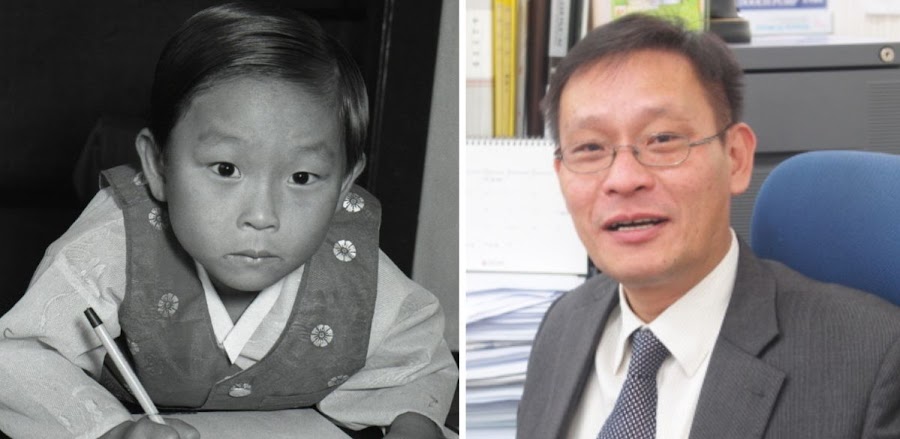
Kim Ung-Yong’s story entered global consciousness when he was listed in Guinness World Records as having the highest recorded IQ, reportedly around 210—a figure so extreme it sits well beyond the upper range of most standardized intelligence tests.
For context: an IQ of 130 typically qualifies someone for high-IQ societies like Mensa. An IQ of 145–160 is often labeled “profoundly gifted.” Above that, data becomes statistically unstable because most tests aren’t designed to measure intelligence at such extremes. People with IQs above 180 are so rare that they represent a tiny fraction of a fraction of the population—far less than one in a million.
Kim Ung-Yong was one of those outliers.
A CHILDHOOD THAT DEFIED NORMAL DEVELOPMENT
He reportedly began speaking fluently at six months old. By age three, he was reading in multiple languages and solving calculus problems. (I started solving calculus problems… never.) At five, he had already mastered Korean, English, French, German, and Japanese.
At just four years old, Kim was admitted to Hanyang University in South Korea to study physics, becoming the youngest person to attend university in recorded history.
THE TRAJECTORY EVERYONE EXPECTED
By 15, he had moved to the United States to work with NASA, where he conducted research in superstring theory and cosmology. On paper, this is the kind of trajectory that sounds like destiny—one genius marching toward world-changing breakthroughs.
WHY ARE LADYBOYS SO ACCEPTED IN THAILAND EVEN IF IT IS A CONSERVATIVE COUNTRY?
THE TURN NO ONE ANTICIPATED
And then, at 16, he walked away.
He left NASA, returned to South Korea, and shifted fields entirely, pursuing a Ph.D. in civil engineering at Chungbuk National University. Later, he served as adjunct faculty there, and in 2014 became an associate professor at Shinhan University, as well as vice president of the North Gyeonggi Development Research Center.


WHEN THE NARRATIVE TURNED CRUEL
This is the moment where the narrative turns—and where media coverage often becomes unkind.
Kim Ung-Yong has repeatedly been described as a “failed genius.” The implication is clear: with that level of intellectual ability, he should have done more. Changed the world. Solved bigger problems. Delivered visible, historic impact.
But that assumption deserves interrogation.
WHAT THE DATA ACTUALLY SAYS ABOUT GENIUS
Research on giftedness consistently shows that extraordinary intelligence does not reliably predict financial success, career satisfaction, or personal well-being. In fact, extreme cognitive giftedness is often correlated with social isolation, burnout, depression, and difficulty finding meaning within rigid institutional structures. Many so-called “geniuses” struggle not because they lack capacity, but because their environment treats them as instruments rather than people.
HIS OWN WORDS, HIS OWN TRUTH
Kim himself addressed this directly:
“At that time, I led my life like a machine — I woke up, solved the daily assigned equation, ate, slept, and so forth. I really didn’t know what I was doing, and I was lonely and had no friends… Society should not judge anyone with unilateral standards — everyone has different learning levels, hopes, talents, and dreams, and we should respect that.”
That statement quietly dismantles the idea that intelligence automatically comes with obligation.
WHO DECIDES WHAT A LIFE IS WORTH?
So the real question isn’t whether Kim Ung-Yong wasted his gift. It’s whether society wasted him by insisting that worth must be measured through spectacle, output, or historical significance.
Do we believe that someone given an extraordinary ability has a moral responsibility to deploy it for the “greater good”? And who gets to define what that greater good looks like?
CHOOSING A QUIETER DEFINITION OF SUCCESS
Because if fulfillment, autonomy, and human connection are part of that equation—and they should be—then choosing a quieter life isn’t failure. It’s agency.
And maybe the uncomfortable truth is this: we celebrate geniuses not because we care about them, but because we want proof that exceptional people exist to validate our idea of progress.
Kim Ung-Yong chose something else. And perhaps that choice tells us more about our values than it does about his potential.
THE QUESTION THAT LINGERS
What do you think?
Does a gift come with a duty—or does it come with the right to choose how, or whether, it’s used at all?
