

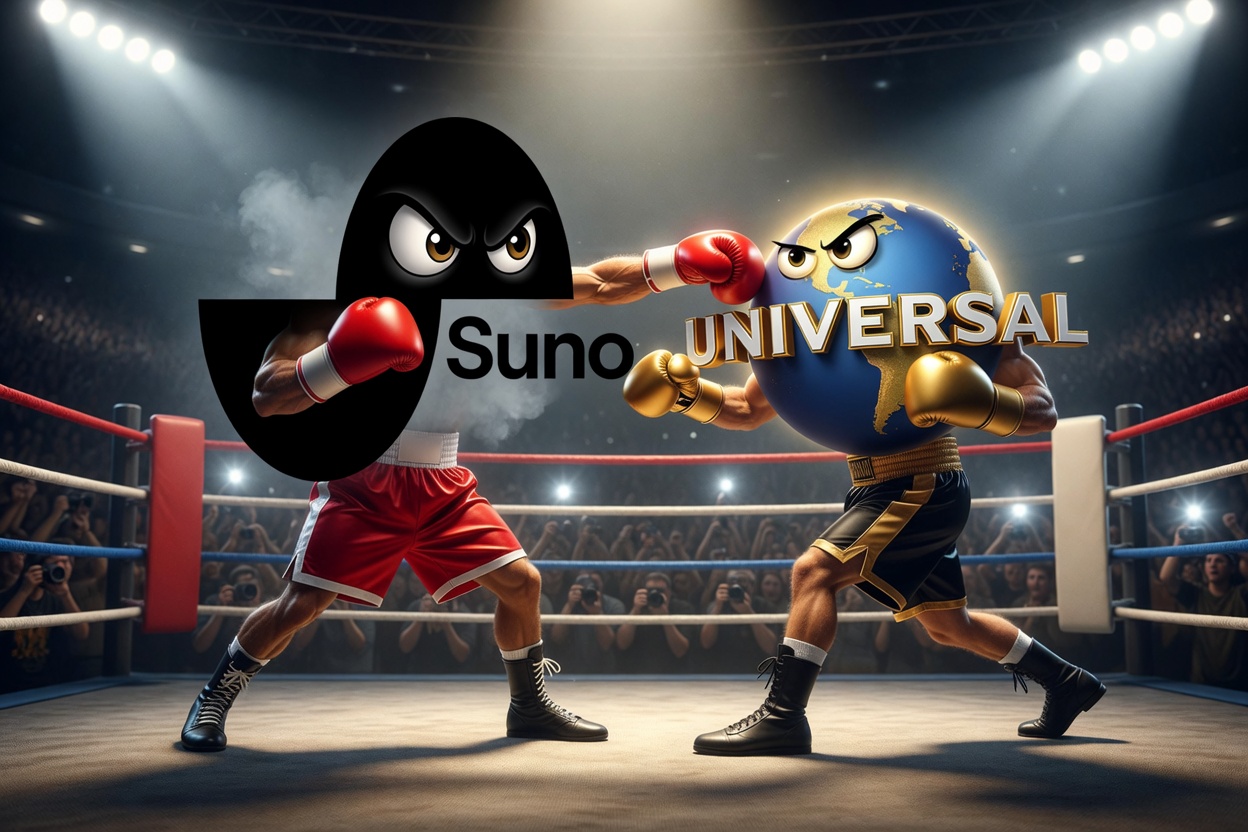
The music industry’s long-running clash with generative AI hit another flashpoint this month. Universal Music Group (UMG) and Sony Music Entertainment are pushing back hard against Suno’s efforts to keep secret exactly how much copyrighted audio it used to train its model — a figure central to ongoing copyright litigation. This isn’t just legal wrangling; it’s a window into the bigger question: Can AI music tools coexist with (or even benefit) human artists, or are they built on shaky, unlicensed foundations?
What Is Suno?
Suno is one of the leading generative AI platforms for music creation. Launched widely in late 2023, it lets users turn simple text prompts (or audio uploads/hums) into full songs — complete with vocals, lyrics, instrumentation, and production — often in under a minute. It spans genres, works on web and mobile apps, and has a free tier (limited daily generations) plus paid plans. It’s positioned as a creative tool for everyone from hobbyists to pros looking for inspiration or quick beats.
Who benefits outside the owners?
Everyday creators and aspiring musicians: No musical training needed. Shower singers, bedroom producers, and content creators can generate custom tracks for social media, demos, podcasts, or fun. It lowers barriers dramatically.
Marketers and businesses: Background music, jingles, or personalized audio for ads/videos without licensing hassles (though commercial use has limits and copyright questions).
Fans and communities: Discovery of new AI-generated styles, fan-made tributes, or interactive experiences. Suno has hit top app charts and boasts massive user numbers.
The broader ecosystem: Potentially more music overall, new revenue streams via licensing deals, and innovation in tools like stems export or extensions.
Critics argue it primarily benefits Suno’s investors (the company recently raised over $400 million at a $5.4 billion valuation) and dilutes the value of human-crafted work.
Suno vs. Udio: Similar but Not Identical
Udio is Suno’s closest rival — another text-to-song AI generator sued around the same time by major labels. Both produce full tracks with vocals from prompts, but differences have emerged in user feedback and capabilities:
Suno often wins on speed, full song structure (up to 4 minutes), user-friendliness, stronger commercial/background music feel, and broader genre coverage. It’s more “mainstream” and polished for quick results.
Udio is frequently praised for higher audio fidelity, more dynamic/evolving compositions, richer textures, and better performance in certain styles like EDM/hip-hop. It can feel more “authentic” or studio-grade but sometimes requires more iteration and has shorter track limits in some versions.
They’re not totally the same — think Suno as the fast, accessible all-rounder and Udio as the one leaning toward nuanced production quality. Both face parallel legal fights over training data, though Udio’s case has some differences (e.g., Sony as sole plaintiff in one venue).
The Warner Music Group Settlement and Licensing Deal
In November 2025, Warner Music Group (WMG) settled its portion of the lawsuit with Suno and entered a groundbreaking partnership. This removed WMG as a plaintiff, leaving UMG and Sony pressing forward.
Key elements of the deal:
- Licensed training models: Suno will build new, higher-quality AI models trained on WMG’s catalog (with artist opt-in for voice, likeness, name, etc.).
- Compensation and protections: Aims to pay artists/songwriters for use; emphasizes opt-in control.
- Platform changes: Download restrictions (free users can’t download; paid users have caps, more costs for extras). Focus shifts toward licensed outputs.
- Additional perks: Suno acquired WMG’s Songkick platform for live music discovery.
- It’s framed as pro-artist AI — licensed, revenue-sharing, and collaborative. Similar moves have happened with Udio. However, industry pros and users have raised concerns: outputs may involve label ownership stakes or royalty splits, free-tier limitations, and questions about whether legacy artist advances truly compensate for AI training use.
Bigger Picture: Music Industry, Artist IP Protection, and the Future
This fight over Suno’s “Model Training Figure” (tens of millions of audio files, per public admissions) underscores core tensions. Labels argue massive unauthorized copying undermines fair use, especially for commercial AI services. Suno wants the exact number sealed to avoid competitive benchmarking.
Implications:
- IP Protection: Pure AI-generated music often can’t be copyrighted in the US (requires human authorship), creating a public domain flood risk that could devalue originals. Labels are pushing licensing as the path forward — turning potential threats into revenue.
- Industry Shift: Majors like WMG are adapting rather than blocking. Expect more hybrid models: AI-assisted human creativity gets stronger protection, while fully machine-made tracks face restrictions or different economics. This could empower indie creators but also concentrate power if labels control licensed datasets.
- For Artists: Opportunities in opt-in licensing and new fan tools, but risks of market saturation, voice cloning concerns, and diluted royalties. The “AASHA” (resilient hope) many artists embody will be tested — balancing innovation with protecting the human spark that makes music meaningful.
- Global/Cultural Angle: In Asia’s booming K-pop and P-pop scenes, where training data includes diverse global catalogs, this could influence how labels protect catalogs or partner on AI. Tools like these might help emerging acts experiment but challenge established IP value.
The case continues, with discovery deadlines looming. Whatever the court decides on sealing or amendments (like adding thousands more tracks identified via Audible Magic), it will shape how AI and music evolve.
This moment feels like a crossroads: AI as democratizing force or extractive disruptor? The Warner deal suggests a pragmatic middle — licensed coexistence — but the devil is in the details of compensation, ownership, and creativity. For platforms like AsianEAC covering the intersection of culture and tech, watching how Asian artists and industries navigate this will be key. What are your thoughts — tool for the people or threat to the craft?
