

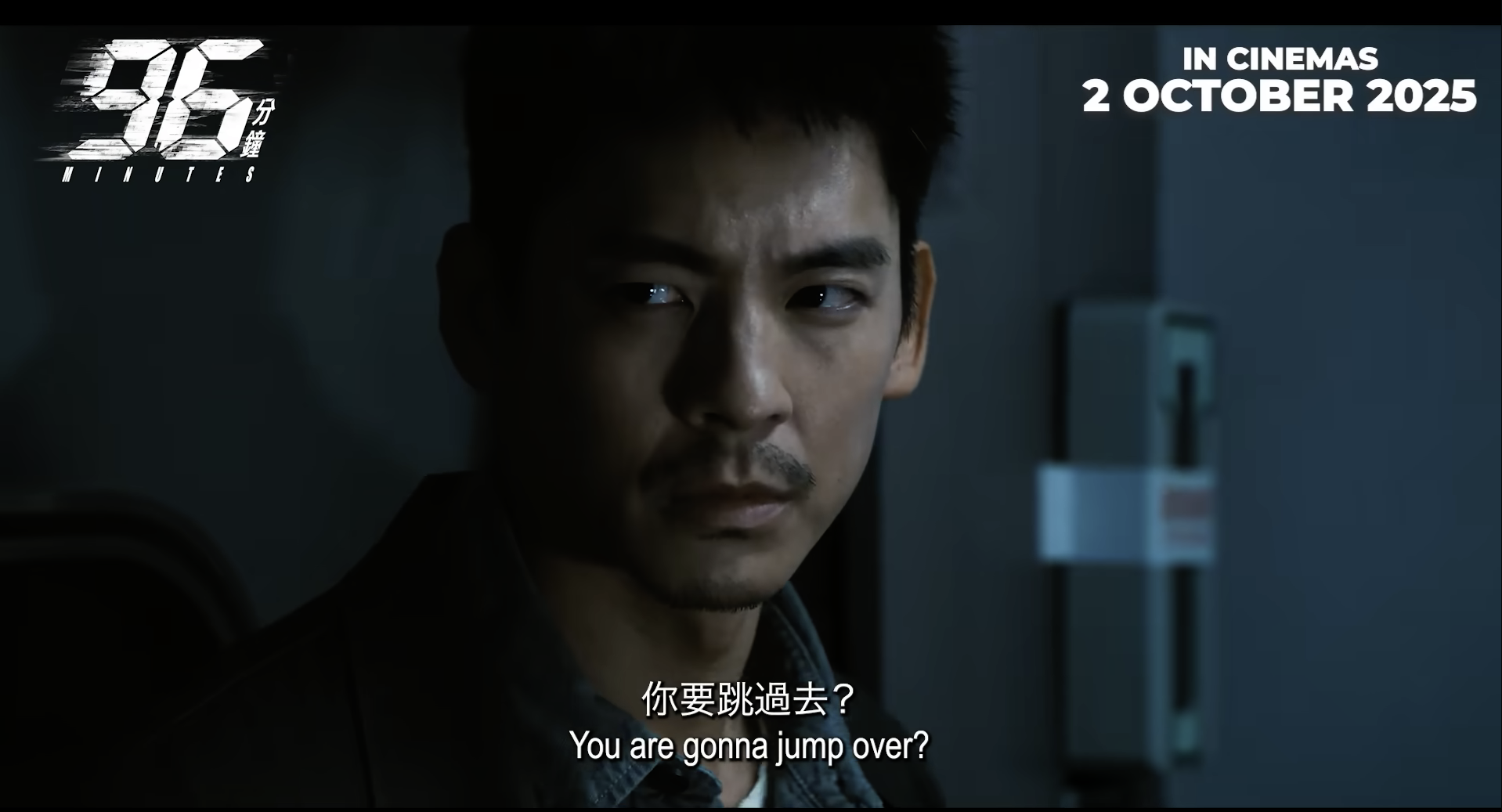
Imagine getting on a high-speed train for what should be a routine 96-minute trip from Taipei to Kaohsiung. Comfortable seat. Quiet passengers. The familiar rhythm of Taiwan’s bullet train slicing through the cityscape.
Then you discover the train has been rigged with explosives.
That’s the premise of 96 Minutes, Taiwan’s first large-scale high-speed rail disaster thriller, and it wastes very little time throwing viewers into panic, guilt, and escalating chaos. The film follows a former bomb disposal expert who is forced back into a nightmare he thought he left behind years ago. Three years earlier, he made a devastating decision during a coordinated bombing attack: he chose to save his own loved ones, while hundreds of others died.
Now he’s trapped on another train carrying another bomb.
Only this time, his detective fiancée is onboard too.
The movie understands exactly what makes train thrillers so effective. There’s no escape. No easy exit. No pause button. The clock keeps moving, the train keeps moving, and every decision affects hundreds of people trapped together in a confined space hurtling across Taiwan at high speed.
What makes 96 Minutes particularly effective is that it doesn’t rely purely on explosions or spectacle. The emotional tension drives the story just as much as the action. The protagonist isn’t simply trying to stop a terrorist attack; he’s trying to survive the consequences of his own past choices. The bombs become tied to guilt, trauma, and redemption.
For Taiwanese audiences, the setting adds another layer of intensity. Taiwan’s high-speed rail system is deeply woven into everyday life. Millions of people have taken that exact Taipei-to-Kaohsiung route. They know the stations, the announcements, the seats, the rhythm of the ride. Turning one of Taiwan’s proudest transportation systems into the setting of a disaster thriller makes the danger feel immediate and personal.
And internationally, the film taps into the same claustrophobic energy that made movies like Train to Busan and The Taking of Pelham so gripping: ordinary people trapped in a moving pressure cooker where every second matters.


Greg Hsu Continues His Rise as Taiwan’s Breakout Star
A huge reason the film works is Greg Hsu.
Over the last few years, Greg Hsu has become one of the most recognizable faces in modern Taiwanese entertainment. International audiences first fell hard for him through Someday or One Day, the emotionally devastating time-travel romance that became a word-of-mouth phenomenon across Asia and later developed a global streaming following.
What separates Greg Hsu from many leading men is how natural he feels onscreen. He has the ability to carry emotional heaviness without turning melodramatic. In 96 Minutes, that matters because the character spends much of the film wrestling with guilt, fear, and responsibility while trying to stay calm under pressure.
He’s also shown impressive range in projects like Marry My Dead Body, the supernatural action-comedy that unexpectedly became one of Taiwan’s biggest global streaming successes. That film proved he could handle comedy, emotional drama, and action simultaneously — a combination that made him an ideal lead for a thriller balancing tension and human vulnerability.
At this point, Greg Hsu is becoming part of a larger generation of Taiwanese actors helping carry the country’s entertainment industry onto the global stage.
Director Leste Chen Understands Emotional Spectacle
Behind the camera is Leste Chen, a filmmaker known for sleek commercial storytelling with strong emotional undercurrents.
That balance is important because disaster thrillers can easily become hollow if audiences don’t care about the people involved. Chen keeps the emotional relationships central even as the stakes escalate. The film constantly returns to questions of sacrifice, guilt, and whether redemption is actually possible after catastrophic choices.
Visually, the train setting also gives Chen plenty to work with: narrow corridors, locked compartments, surveillance systems, crowded cabins, and the relentless speed of the railway itself. The environment becomes part of the suspense.
Taiwanese Cinema Is Having a Global Moment
96 Minutes arrives at a time when Taiwanese film and television are gaining increasing international attention through streaming platforms.
For years, Korean entertainment dominated discussions around Asian media globally, while Taiwan’s industry often flew under the radar. That’s changing quickly.
Taiwanese horror film Incantation became a major Netflix breakout hit and generated global online discussion for its disturbing found-footage storytelling and psychological horror. Crime thriller series The Victims’ Game found international audiences with its dark forensic mystery and emotionally layered narrative.
Meanwhile, Wave Makers gained attention worldwide for directly tackling political campaigning, workplace harassment, and social accountability in ways many Asian dramas still avoid. Psychological thriller Shards of Her also built strong international word-of-mouth through its exploration of trauma and memory.
Even Taiwan’s romance dramas have made global impact. Someday or One Day became influential enough to inspire adaptation discussions in multiple markets because of how creatively it blended romance, grief, suspense, and science fiction.
One thing Taiwanese productions increasingly do well is genre fusion. Their stories rarely stay confined to one lane. Horror becomes social commentary. Romance becomes psychological mystery. Disaster thrillers become emotional character studies.
That flexibility helps Taiwanese storytelling stand out in the streaming era, where audiences are looking for stories that feel emotionally grounded while still delivering entertainment.
And 96 Minutes fits perfectly into that rise: a tense commercial thriller with enough emotional weight underneath the explosions to stay with audiences after the credits roll.
