

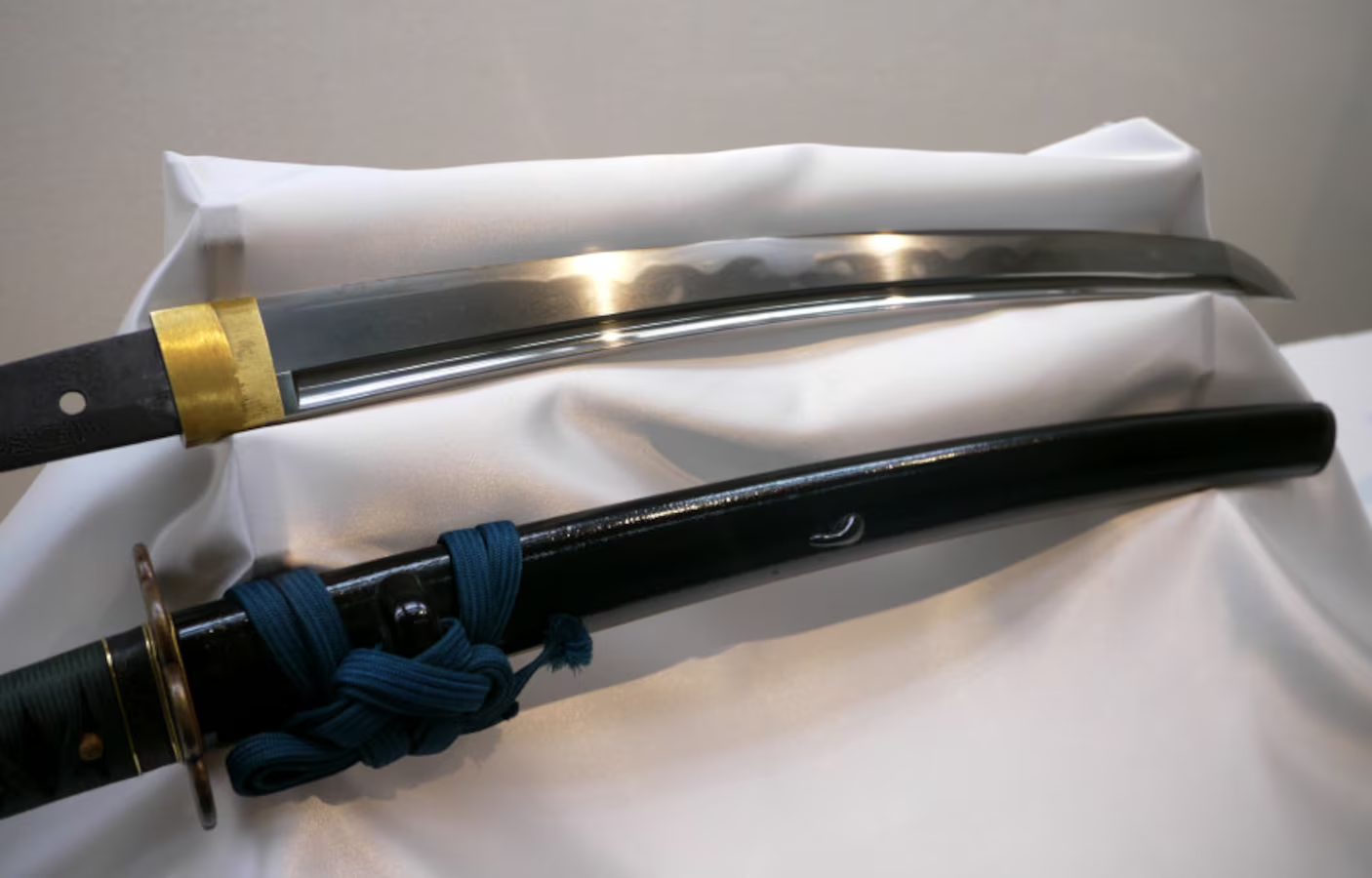
In feudal Japan, a sword wasn’t just a sharp piece of metal you strapped on for the occasional battlefield disagreement. It was a partner. A lifelong companion. The kind of relationship where you and your blade were so tightly bonded that some warriors believed a part of the swordsmith’s own spirit—courage, heart, maybe a little residual forge-smoke attitude—ended up living inside the steel.
Choose your blacksmith wisely. A good one puts integrity into the blade. A troubled one… well, that’s where the Muramasa story gets interesting.
Meet the Man Who Made Blades Too Good for Comfort
Sengo Muramasa was one of the most celebrated swordsmiths of his era. He devoted his life to the craft, produced blades of legendary sharpness and quality, and even trained students. His work was the real deal—clean lines, devastating edge, the kind of sword that made other smiths quietly jealous.
But reputation is a funny thing. Over time, Muramasa’s name became inseparable from a darker legend: his swords were said to be cursed.
One popular tale claims Muramasa prayed so intensely to become the greatest swordsmith who ever lived that something less than heavenly answered. The skill was granted. The blades were impossibly sharp. The catch? Each one carried a restless, blood-hungry spirit. Other stories say the smith himself had a volatile temper—occasional berserk rages that somehow transferred into the metal he hammered. Either way, the finished product was brilliant, dangerous, and widely believed to have a mind of its own.
What Exactly Does a Cursed Blade Do?
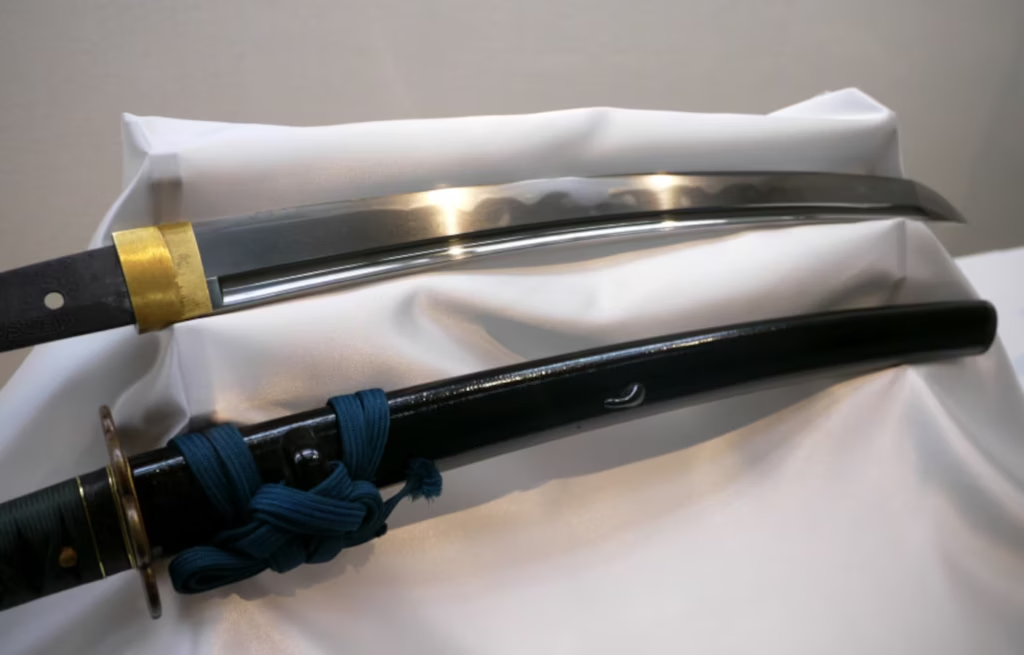


The folklore offers a few competing (and equally unsettling) theories:
- The sword sometimes seizes control of the wielder, pushing them into uncontrollable rage.
- It grants temporary superhuman strength or near-immunity in battle… at a price.
- It bestows unmatched swordsmanship, then demands the blade be “fed.”
The most chilling version is the unquenchable thirst. Owners of Muramasa blades were said to develop an irresistible urge to kill that eventually turned on family, friends, and finally themselves. Guilt and madness usually followed. Whether you believe the supernatural part or not, the cultural point is clear: power without restraint is a dangerous partner.
The Tokugawa Family’s Extremely Unlucky Century
The legend really took root because of a string of real misfortunes that struck the Matsudaira (later Tokugawa) family—the very clan that would eventually unify Japan under Tokugawa Ieyasu.
In 1535, Matsudaira Kiyoyasu, lord of Okazaki Castle and grandfather of the future shogun, was killed by his own retainer, Abe Masatoyo. A rumor of betrayal had swirled around Masatoyo’s father. In a tragic scramble to protect family honor, Masatoyo ended up cutting down his lord instead. The blade that did the job—a clean, almost surgical cut from shoulder to hip—turned out to be a Muramasa. That kind of sharpness does not go unnoticed.
Years later, Kiyoyasu’s son Hirotada woke to an intruder in the night. He gave chase, only to discover his clothes soaked in blood. The attacker, a drunk retainer named Iwamatsu Hachiya, was using a Muramasa wakizashi. Hirotada survived that particular evening, but the pattern was already forming in people’s minds: wherever the Matsudaira family went, Muramasa steel seemed to follow with bad intentions.
These incidents (and a few more involving Ieyasu himself) cemented the reputation. Whether by coincidence, regional preference for Muramasa blades among Mikawa samurai, or something spookier, the Tokugawa household eventually treated the name like a bad omen. Later generations amplified the stories until Muramasa swords were widely regarded as “demon blades.”
Art, Spirit, and Why We Still Care
Here’s the part that keeps the legend alive centuries later. In Japanese culture, the idea that a creator leaves a piece of themselves in their work is not fringe mysticism—it’s almost common sense. A blacksmith pours strength, focus, and character into the steel the same way a painter leaves fingerprints in the paint or a writer leaves voice on the page. If the smith was driven, intense, or tormented, the blade might carry that energy.
That’s why the Muramasa stories still captivate. They’re not just ghost stories about killer swords. They’re reminders that craftsmanship is intimate, that excellence can be double-edged, and that the tools we make sometimes reveal more about us than we intend.
One of these days, if the lottery gods or the billionaire fairy ever smile, hanging a real Japanese sword on the wall still feels like the ultimate flex—not because of any curse, but because of the centuries of skill, history, and human intensity folded into the steel. Until then, we’ll keep the legend sharp and the respect intact.
