

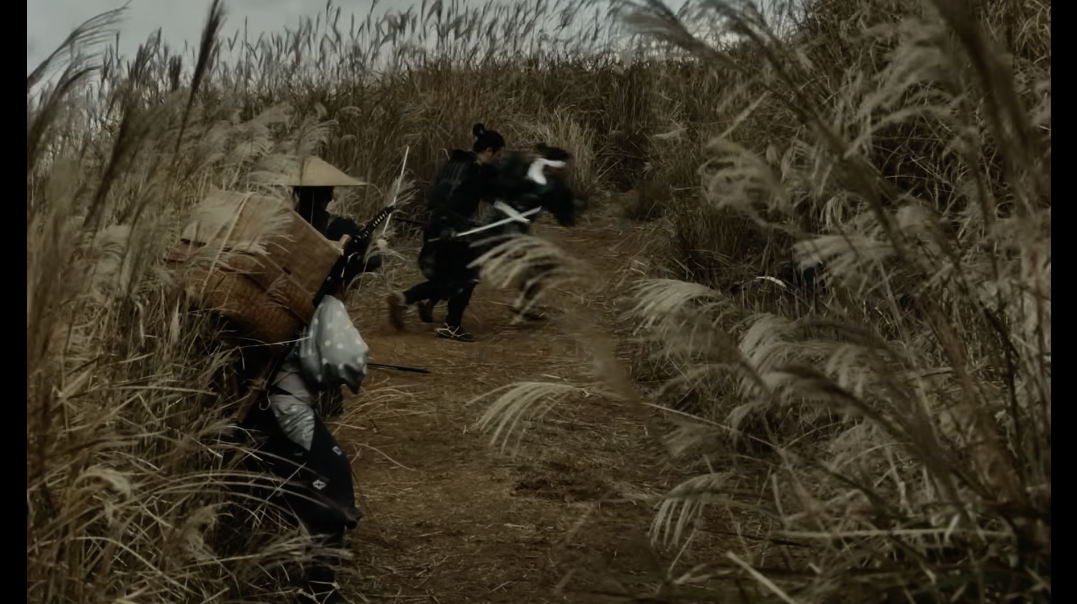
Imagine combining the brutal, high-stakes political tension of Game of Thrones with the cerebral, locked-room mystery of an Agatha Christie thriller, all set against the backdrop of feudal Japan. That is exactly what you get in The Samurai and the Prisoner, a brilliant historical whodunnit that is easily one of the most uniquely gripping cinematic experiences of the year.
The Story: A Master Strategist in the Depths of a Dungeon
Set in the winter of 1578 during the chaotic Sengoku period, the film follows Araki Murashige, a provincial lord who has boldly rebelled against the tyrannical warlord Oda Nobunaga. Holed up and besieged within the formidable walls of Arioka Castle, Murashige faces an impending invasion from the outside.
But the real threat comes from within. As the siege wears on, a series of bizarre, baffling, and seemingly impossible murders strike the castle court. With paranoia skyrocketing and his men fearing divine judgment, Murashige is completely out of his depth.
Desperate for answers, he turns to the most dangerous man on the property: Kuroda Kanbei. Kanbei is a legendary military genius loyal to Nobunaga, whom Murashige threw into a dark, subterranean castle dungeon after a failed negotiation. To save his court from fracturing, the samurai lord must repeatedly descend into the abyss to consult his brilliant, captive enemy. What follows is a mesmerizing, psychological game of chess between two masterminds trying to solve a mystery before the castle walls crumble completely.
What Makes It Unique: Psychological Warfare Over Swordplay
If you are expecting a traditional jidaigeki (period drama) filled with non-stop, flashy katana duels, think again. The Samurai and the Prisoner subverts the entire genre. It trades explosive battlefield action for sharp, razor-focused dialogue and thick, claustrophobic suspense.
What makes the film incredibly unique is its “locked-room” dynamic mixed with grand historical stakes. The heavy lifting is done through the incredible, extended philosophical debates between the samurai and his prisoner. They probe each other’s minds, dissecting the hypocrisies of the samurai code, religion, and the cycle of violence, all while piecing together clues to an active murder investigation. Shot heavily on location in real Japanese castles and temples rather than using green screens, every frame feels tactile, grounded, and intensely atmospheric.
Behind the Screen: A Match Made in Cinematic Heaven


The prestige behind this project is immense. The film is a direct adaptation of Kokurojo, the bestselling, 166th Naoki Prize-winning novel by Honobu Yonezawa.
Bringing this brilliant literary thriller to life is the legendary auteur Kiyoshi Kurosawa (known for psychological horror masterpieces like Cure). Remarkably, this marks Kurosawa’s very first foray into both period dramas and traditional mystery—and critics are already calling it a resounding triumph. After making waves with its premiere at the 2026 Cannes Film Festival, it has garnered a spectacular 94% approval rating on Rotten Tomatoes, with critics comparing its tension and precise framing to Akira Kurosawa’s Throne of Blood.
The powerhouse performances from Masahiro Motoki as the conflicted, tea-loving Lord Murashige and Masaki Suda as the cunning, enigmatic prisoner Kanbei create an electric, on-screen chemistry that will leave you completely spellbound.
The Kurosawa Name: A Legacy, Not a Lineage
Whenever a Japanese film involving samurai bears the name “Kurosawa,” it inevitably raises eyebrows across the global film community. To clear up a common misconception: director Kiyoshi Kurosawa is not related to the legendary Akira Kurosawa. “Kurosawa” is a relatively common Japanese surname, making this a spectacular cinematic coincidence. Think of them like American directors Paul Thomas Anderson and Wes Anderson—both are titans of their craft who share a last name, but no DNA.
However, the comparison is well worth making. While the late, great Akira Kurosawa redefined global cinema with his sweeping, action-packed samurai epics like Seven Samurai and Yojimbo, Kiyoshi Kurosawa has spent decades cemented as a master of modern psychological horror and slow-burn thrillers (most famously with his 1997 masterpiece, Cure).
With The Samurai and the Prisoner, Kiyoshi steps into Akira’s historical sandbox for the very first time. But instead of mimicking the grand, sweeping battles of his namesake, Kiyoshi brings his signature, spine-chilling psychological tension to the samurai genre, creating a brilliant bridge between two entirely different eras of Japanese filmmaking.
Basic Info
- Title: The Samurai and the Prisoner (Japanese: 黒牢城 / Kokurojo)
- Director: Kiyoshi Kurosawa
- Main Cast: Masahiro Motoki, Masaki Suda, Yuriko Yoshitaka, Munetaka Aoki, Ryota Miyadate
- When it was Released: Premiered May 19, 2026 (Cannes Film Festival); Released theatrically June 19, 2026 (Japan)
- When and Where it is Available: Currently screening in select international film festivals and theaters across Japan. It is scheduled for a wider global theatrical and eventual streaming release starting July 31, 2026.
