

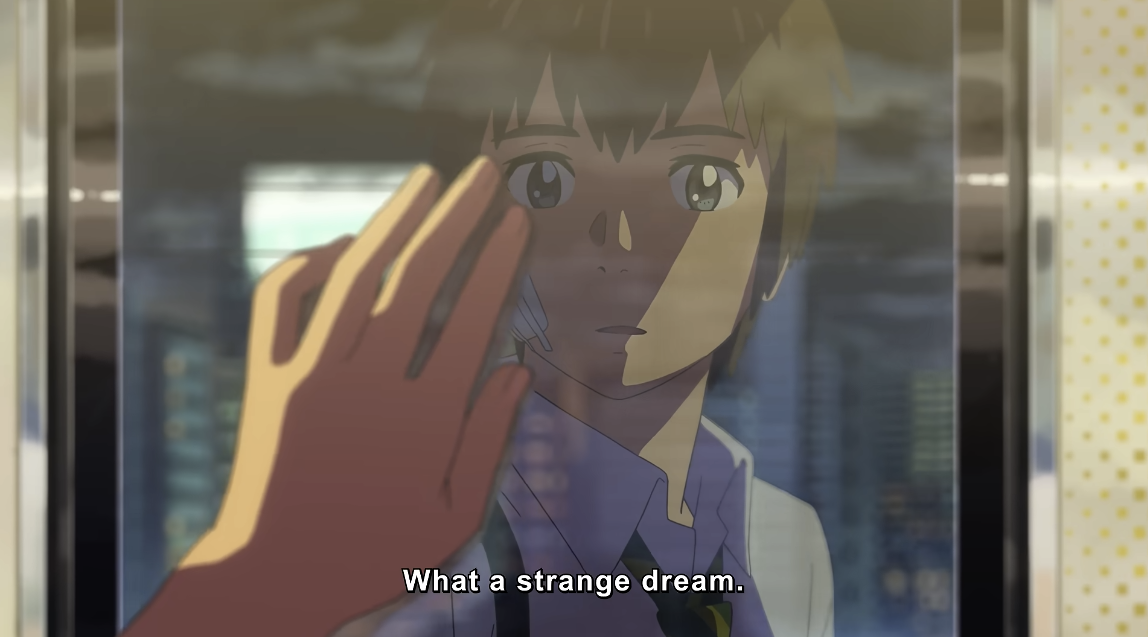
You’ve seen the stills even if you’ve never pressed play. Two teenagers reaching for each other on a staircase. A comet splitting the sky. A name written on a palm that won’t stay. The RADWIMPS chorus that shows up in every “anime that ruined me” edit. Your Name leaked into the culture the way a few films do: people quote the feeling without always knowing the plot.
That plot is worth knowing on a big screen. A 4K remaster is in theaters now for the film’s 10th anniversary, and the next two months also bring Castle in the Sky, Princess Mononoke, Spirited Away, and Akira back the way they were built to be seen. Here are the five films, what actually happens in them, and why they still move money, critics, and people who only knew the memes.
Your Name Still Works Because the Feeling Is Simple and the Scale Is Huge
Mitsuha is a high-school girl stuck in a quiet rural town. Taki is a high-school boy in Tokyo. They start waking up in each other’s bodies with no warning. At first it is comic and awkward — the hair-tying, the “I’m a girl today” panic that the internet turned into a shorthand. Then they try to find each other in real life, and the story turns into a romance that has to cross time as well as distance. The staircase, the comet, the name that won’t stick: those images are the last stretch of a story that earns them.
Makoto Shinkai and CoMix Wave Films made the film look like a travel poster that moves: dusk over the mountains, trains at rush hour, a sky that feels close enough to touch. RADWIMPS’ score does as much work as the pictures, which is why the songs escaped the movie.
Commercially it is still the high-water mark for original Japanese animation. It earned more than $400 million worldwide and remains the highest-grossing original Japanese animated feature. In Japan it was a genuine event; abroad it proved that a new anime film with no preexisting franchise could fill multiplexes. Critically it won major Japan Academy prizes (animation, director, screenplay, music) and made Shinkai the director people compare to Miyazaki whether he wants that comparison or not. The 4K remaster from GKIDS began a nationwide run on August 14 in both Japanese with subtitles and the English dub. Check local listings; some markets are still playing it.


Castle in the Sky Is the Adventure Template Ghibli Has Been Building On for 40 Years
Pazu is an engineer’s apprentice in a mining town. One night he sees a girl, Sheeta, floating down from the sky, held up by a glowing pendant. Pirates and the military both want that stone. It is the key to Laputa, a legendary floating castle packed with lost technology and a garden that has outlived its builders.
Hayao Miyazaki’s 1986 film — Studio Ghibli’s first official feature — is a kids’ adventure with real weight: flying machines that look designed, not decorated; a friendship that does not turn cute; a warning about power that people will kill for. The set pieces (the fortress in the clouds, the robot that tends the garden) are the images a lot of later anime still chases.
It did not become a global box-office monster the way later Ghibli films did, but it defined the studio’s house style: handmade spectacle, children who act with courage instead of sass, and a sky that feels bigger than the plot. The 40th-anniversary Ghibli Fest dates were August 22–26. If a theater near you added a holdover screening, that is the one to grab. Otherwise it is the title that just left the calendar.


Princess Mononoke Is Ghibli at Full Strength and Not Built for Kids First
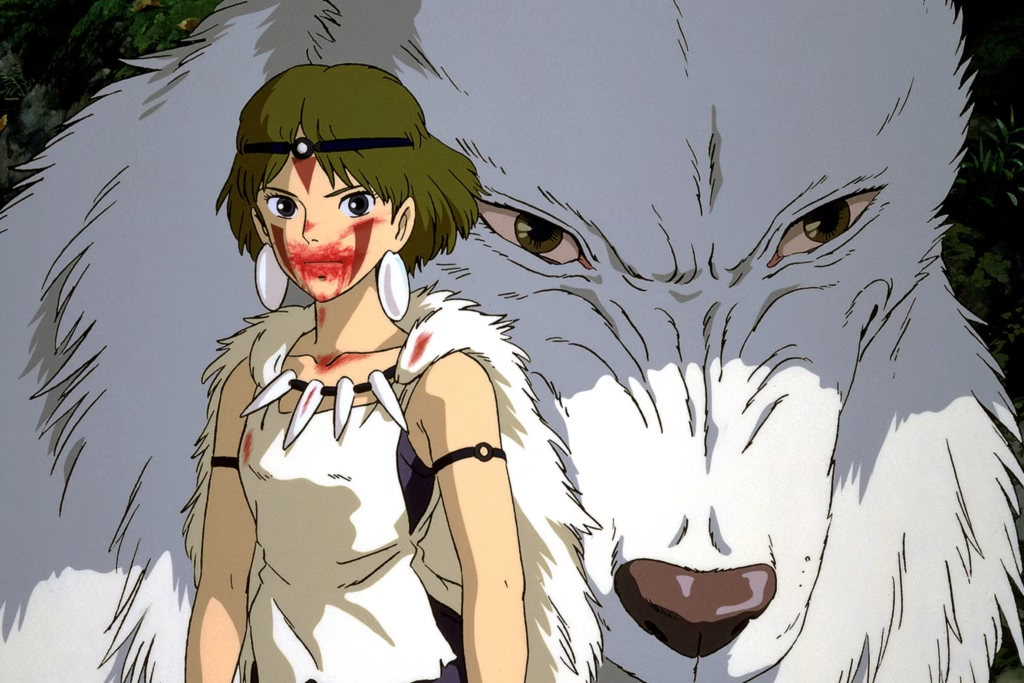
Ashitaka, a young prince from a remote eastern tribe, is cursed while defending his village from a demon. He rides west looking for a cure and walks into a war. On one side is Iron Town, led by Lady Eboshi, who is clearing the forest to feed her forges and shelter the outcasts who work them. On the other is San — raised by wolves, called Princess Mononoke — who will kill to keep the forest gods alive.
There is no tidy villain. The film is about what happens when human industry and the old world occupy the same ground. Miyazaki made it for a broader, older audience than Totoro or Kiki. The violence is blunt. The ecology argument is not a slogan.
When it opened in Japan in 1997 it became the country’s highest-grossing film at the time. The later U.S. release through Miramax was the first time a lot of American viewers met Ghibli as something other than a cute video. The 4K remaster returns through Ghibli Fest from September 26 to 30, in both the Japanese original and the English dub. That is the version worth planning around.



Spirited Away Is the Film That Took Anime Into the Oscars and Never Left
Chihiro is about 10. Her parents take a wrong turn on the way to a new house, wander into what looks like an abandoned theme park, and eat food that is not meant for them. They turn into pigs. Chihiro is left in a bathhouse for spirits, stripped of her name, and put to work. To get her parents back she has to last in a world that does not care if a human child disappears.
Miyazaki’s 2001 film is a coming-of-age story told as a workplace nightmare and a fairy tale at the same time. The bathhouse is one of the great sets in animation: crowded, hierarchical, beautiful, and slightly threatening. No-Face, the river spirit, Yubaba — they stick because they feel like rules, not mascots.
It won the Academy Award for Best Animated Feature, the first anime film to do so. Worldwide it became one of the highest-grossing films in Japanese history and the title that turned Ghibli from a critic’s favorite into a household name outside Japan. The 25th-anniversary Ghibli Fest run is October 17–21. That is the last big date on this list and the one most likely to sell out.


Akira Is Still the Film That Taught the West What Anime Could Look Like
In 2019 Neo-Tokyo, Kaneda leads a motorcycle gang. His friend Tetsuo crashes into a strange child during a night ride and is taken by the military. The experiments that follow wake something in Tetsuo that the city cannot contain. Kaneda tries to pull him back. The government, the cults, and the streets all collide.
Katsuhiro Otomo directed the 1988 adaptation of his own manga at a budget that was enormous for Japanese animation then. The bike slide, the collapsing Olympic stadium, the body horror — those images leaked into live-action cinema, games, music videos, and every cyberpunk look that followed. In the West it was not a smash on first release. It became the film people handed each other as proof that animation was not only for children.
Crunchyroll and Sony are bringing the 4K remaster to theaters and IMAX in the U.S. and Canada on September 4, in Japanese with subtitles and in the English dub. Treat it as a one-night event and buy early. IMAX inventory is thin in some cities.
If You Want More Shinkai After Your Name
5 Centimeters per Second (2007) is the earlier, quieter film: three chapters about two people who keep missing each other as they grow up. No body swap, no comet. Just trains, seasons, and the distance that opens when nobody does anything dramatic enough to stop it.
Weathering With You (2019) is the closest companion piece. A runaway boy in Tokyo meets a girl who can clear the rain. The choice they face is personal and also large enough to change the weather over a whole city. Same director, same composer, same mix of teenage feeling and disaster-scale stakes.
Both are easy to find at home if the theatrical window for Your Name has closed in your city.
Where to Check Screening Times
- Your Name: theater sites and apps (AMC, Regal, Fandango) and GKIDS’ listings. The anniversary run started August 14; availability varies by city now.
- Castle in the Sky, Princess Mononoke, Spirited Away: GhibliFest.com and FathomEntertainment.com, plus AMC, Regal, Cinemark, and Marcus pages for Studio Ghibli Fest 2026. Official windows: Castle in the Sky was August 22–26; Princess Mononoke is September 26–30; Spirited Away is October 17–21. Both Japanese (sub) and English dub dates are posted separately.
- Akira: IMAX.com, Fandango, Regal/AMC listings, and the Crunchyroll ticket links for the September 4 4K/IMAX date.
Showtimes are local and sell out on anniversary weekends. Pick the language version you want first, then lock the seat.
